Cure
Acrylic Roof Coating Cure Time
On a warm, sunny day acrylic dries to the touch within hours, but a full cure takes longer. Heat, humidity, and coat thickness set the pace, so we keep the first day rain-free.
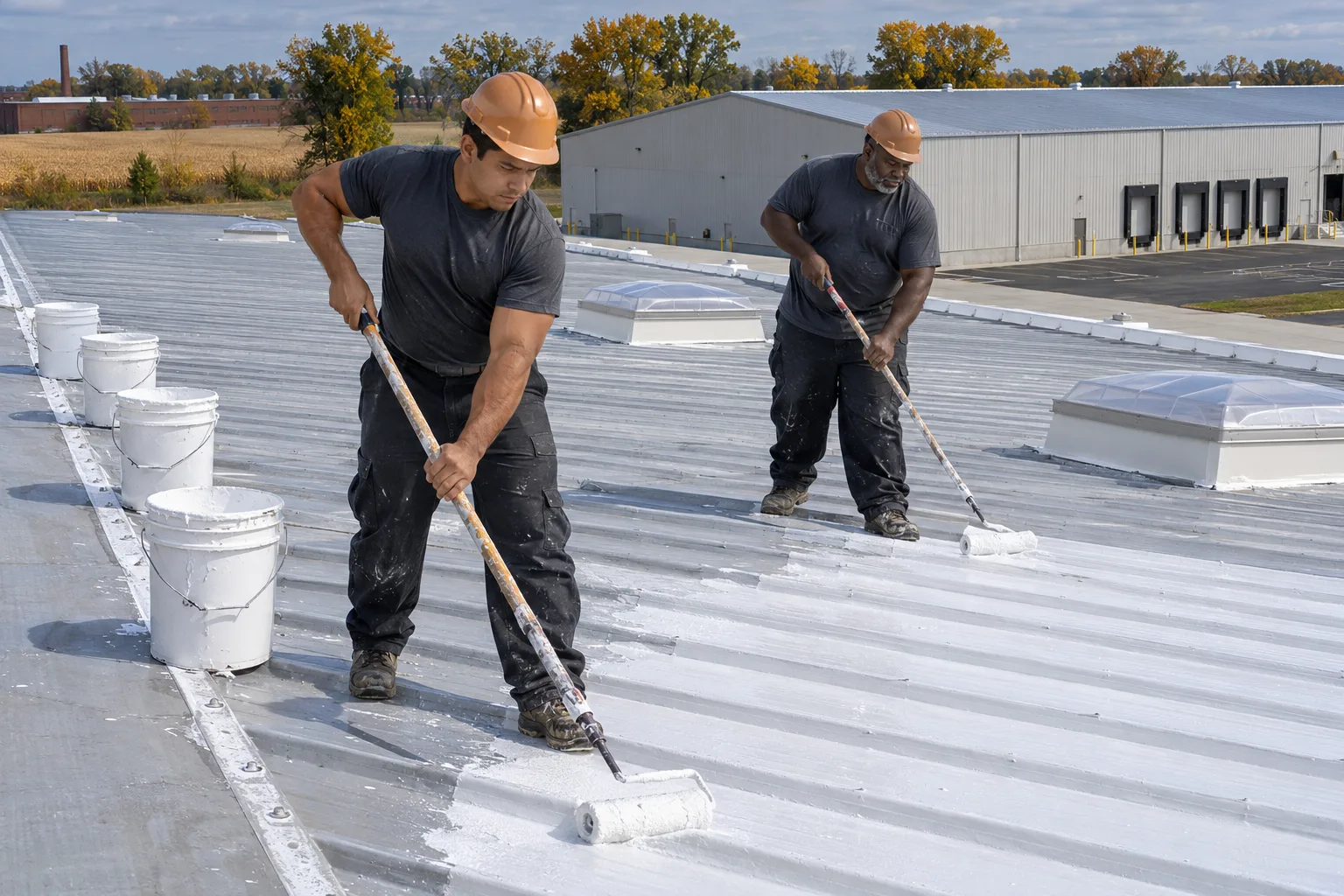
As an Anderson acrylic roof coating contractor, we roll and spray acrylic over pitched metal roofs that drain well, timed for warm, dry stretches of the year.
Anderson acrylic roof coating suits pitched steel that sheds water quickly. Use these rows to check your roof before the walk.
| What You See On The Roof | Acrylic Fits | Prep First | Choose Another |
|---|---|---|---|
| Pitched panels that drain within minutes | Usually Fits | Rarely | Rarely |
| Faded factory paint with light rust | Usually Fits | Sometimes | Rarely |
| Low spots that hold water | Rarely | Sometimes | Usually Fits |
| Old silicone coating on the roof | Rarely | Rarely | Usually Fits |
| Exposed screws that have loosened | Sometimes | Usually Fits | Rarely |
Acrylic will not bond to silicone, so a roof that already has silicone stays with silicone.
Acrylic is forgiving to apply, but it is picky about weather and water. These conditions shape each job.
On a warm, sunny day acrylic dries to the touch within hours, but a full cure takes longer. Heat, humidity, and coat thickness set the pace, so we keep the first day rain-free.
Air and roof temperatures have to clear the maker's minimum, and nights must stay above freezing while it cures. Warm afternoons with cold nights push acrylic later into spring.
Water-based acrylic softens under standing water. Low gutters and dents that pond get built up, drained, or switched to silicone in that area.
Rust that sits on the surface is scaled and primed so the acrylic grips clean steel. Holes are patched or the panel is replaced first.
Acrylic pairs well with other systems on the same roof. These four cover what acrylic is not built for.
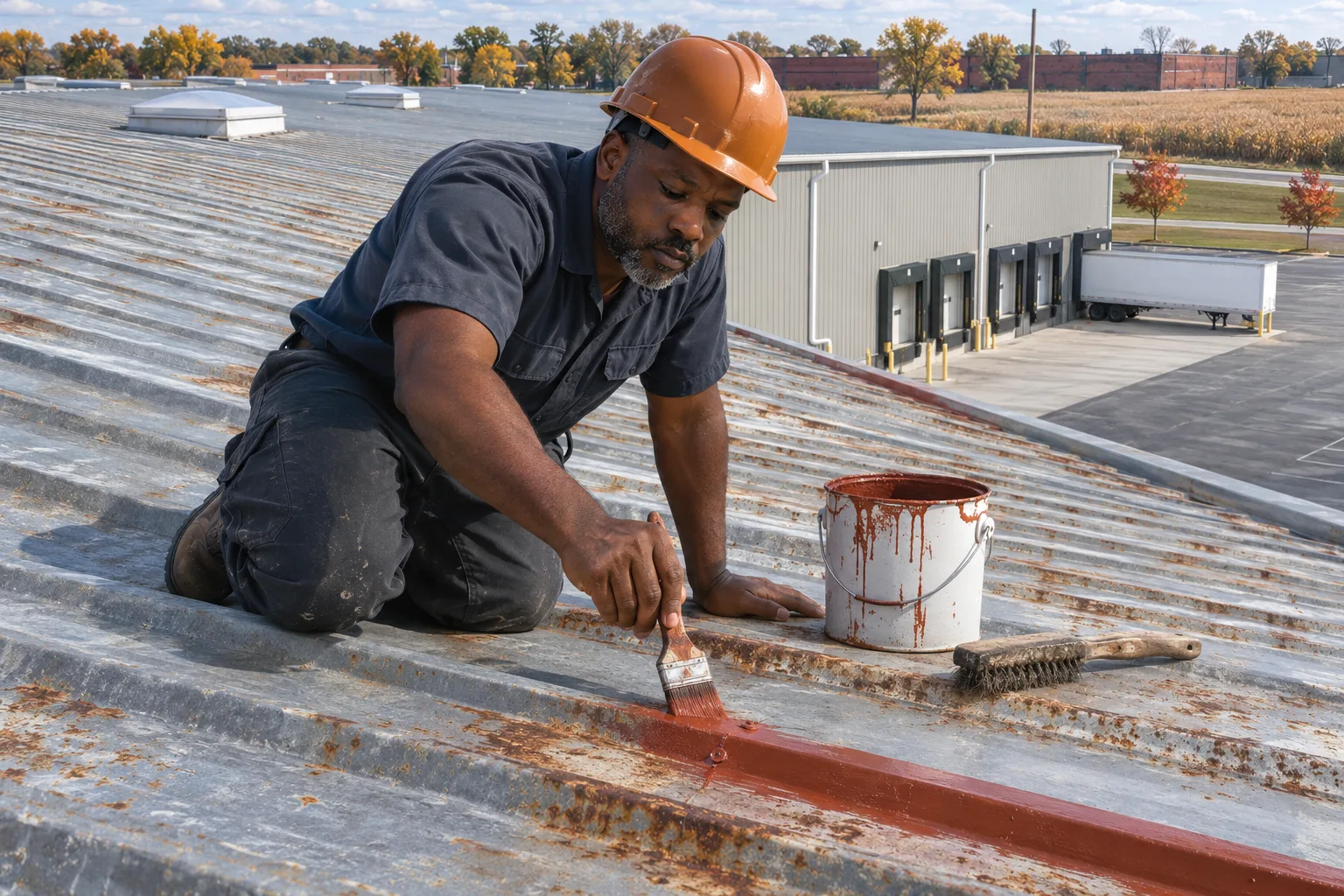
Exposed-fastener steel that needs heavy screw and lap work takes the full metal system, which can use acrylic as its topcoat.
Commercial Metal Roof Coating in Anderson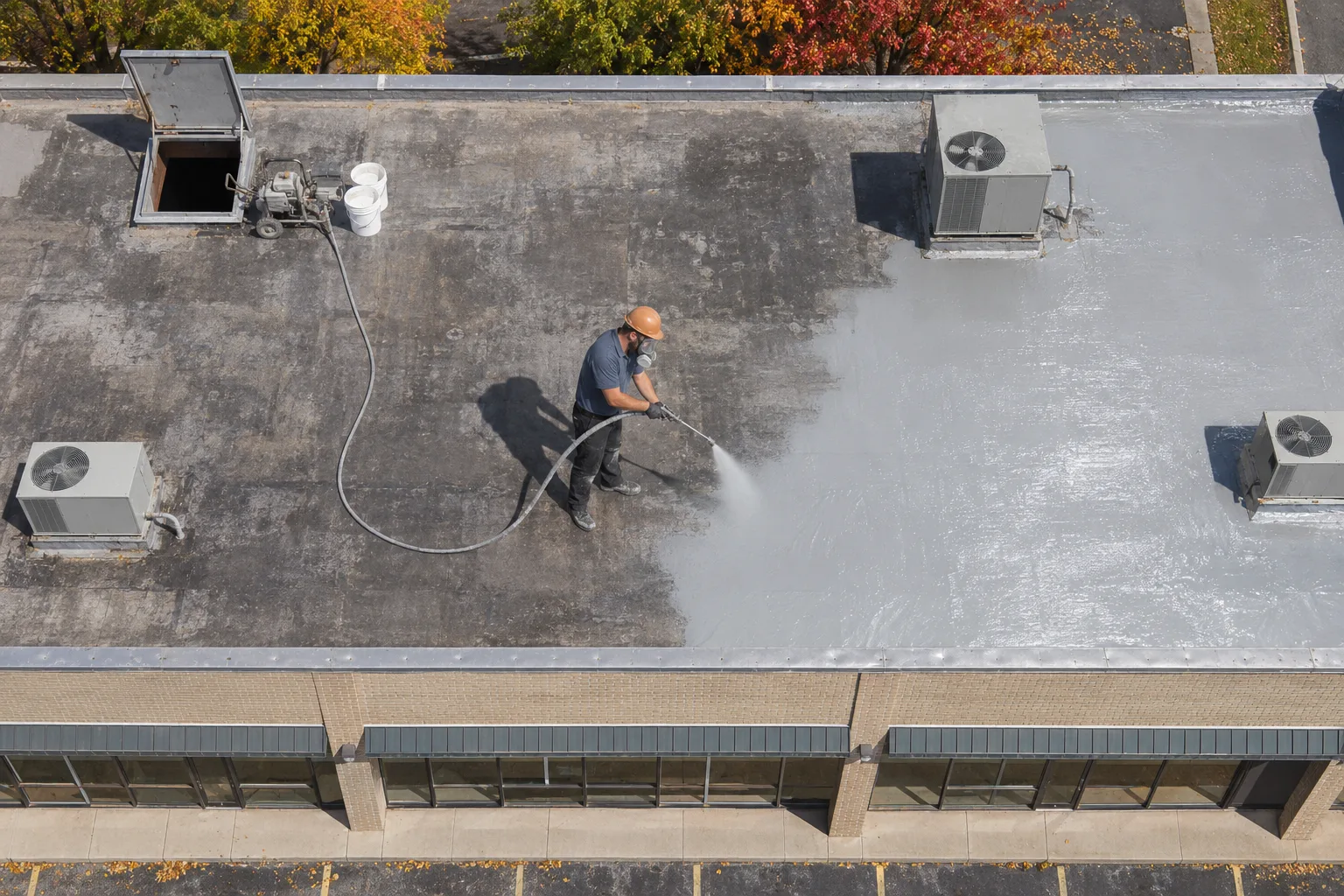
Any low bay or valley that ponds gets silicone, joined to the acrylic field at a sealed, reinforced edge.
Silicone Roof Coating in Anderson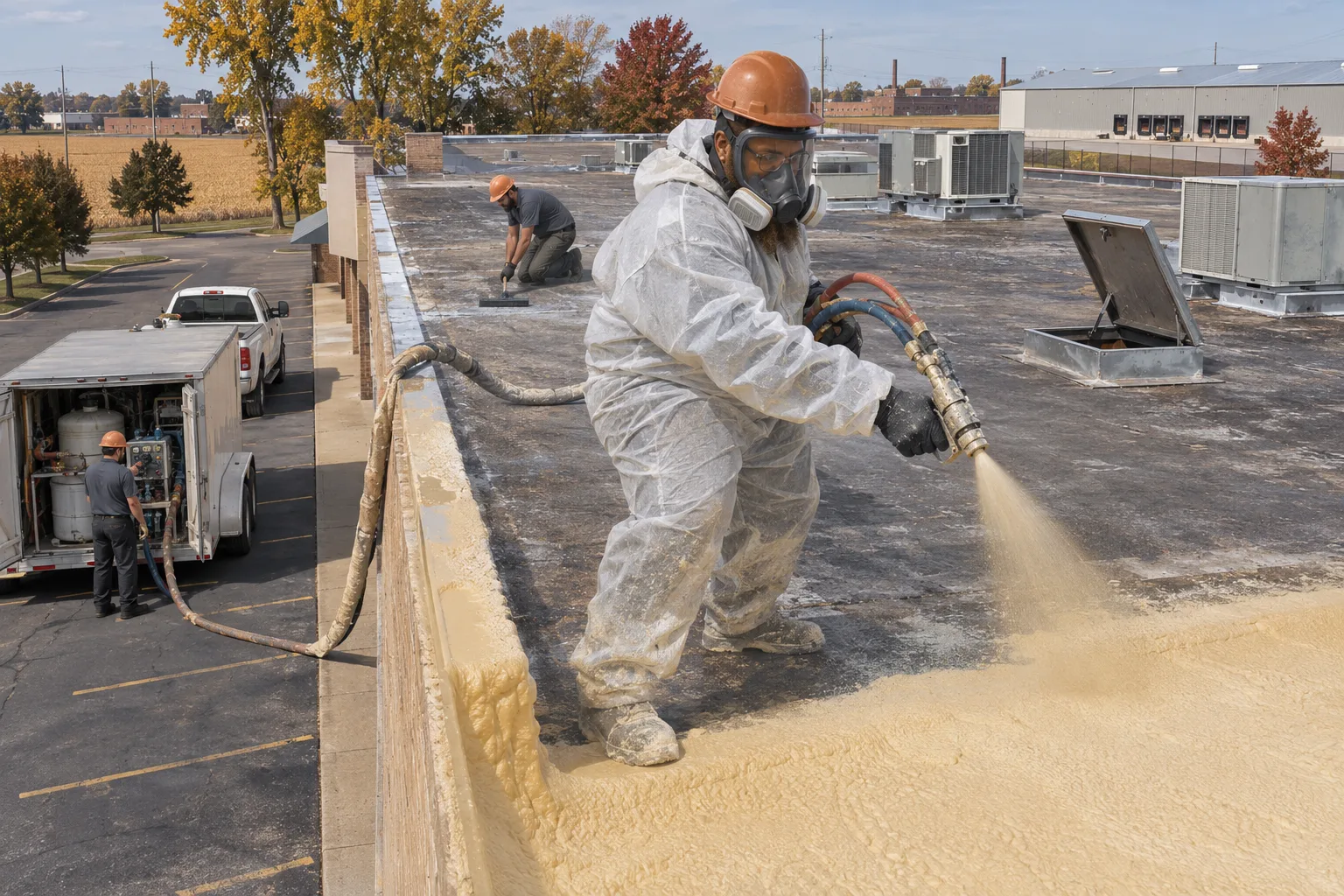
Drafty buildings can take spray foam first, with an acrylic topcoat applied during warm weeks.
Spray Foam Roofing in Anderson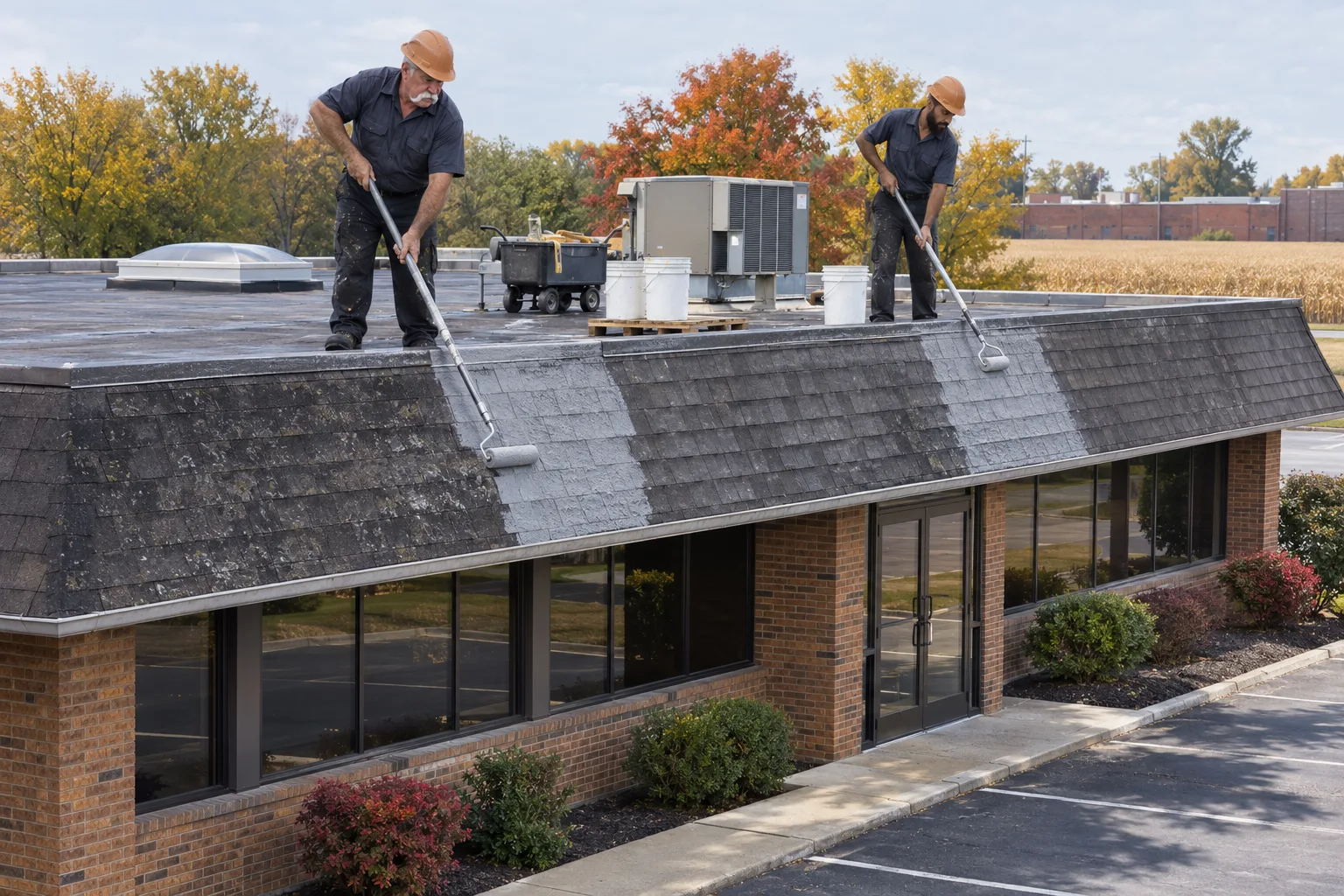
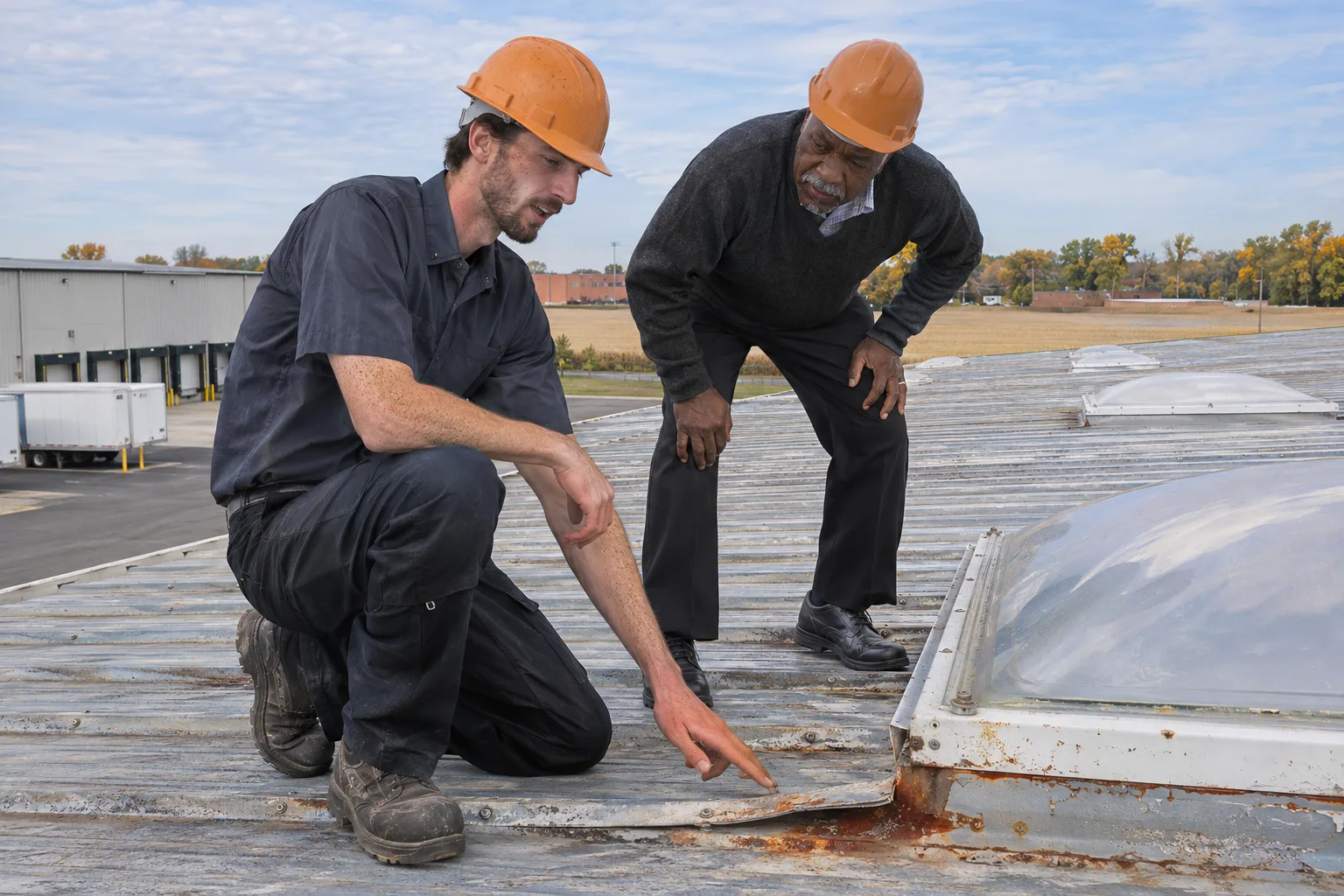
Shingle roofs on the same property are coated with a product made for asphalt, on their own schedule.
Shingle Roof Coating in AndersonAcrylic gives pitched steel a bright, flexible surface at a lower material cost. Here is what that means for the building.
The bright white finish reflects summer sun off the panels, which helps rooms under the roof stay cooler on hot afternoons.
Worn spots can be washed and recoated with more acrylic, so later maintenance stays simple.
Fabric and sealant at each detail go under the acrylic, closing off the usual leak points on steel.
Rolling and spraying happen on the roof surface while stores, offices, and shops stay open below.
Water that shows only in driving rain often traces to a lap or a screw. Call and we will talk through where it appears.
Call UsPlanning acrylic for this coming summer? Get a free ballpark range by roof size, then book the roof walk.
Get A Free Ballpark EstimateAcrylic jobs follow five stages, scheduled around the forecast as much as the roof.
We check how fast each section drains, where water lingers, and whether an older coating is already up there. Screws, laps, and rust get counted and photographed.
Drainage CheckLoose screws are replaced, laps get fabric, and any area that ponds is corrected or set aside for silicone. Rust holes are patched with matching steel.
RepairsAfter a pressure wash, bare spots and treated rust get a primer that suits acrylic. Old chalky paint is cleaned until the surface stops rubbing off on a hand.
PrepA base coat goes on first, then a topcoat in a contrasting tint so missed spots show. Each coat gets a forecast check for dry weather and nights above freezing.
CoatingOnce cured, the roof is walked, thickness is checked, gutters are cleared, and you get the product name and recoat notes for your records.
Close-Out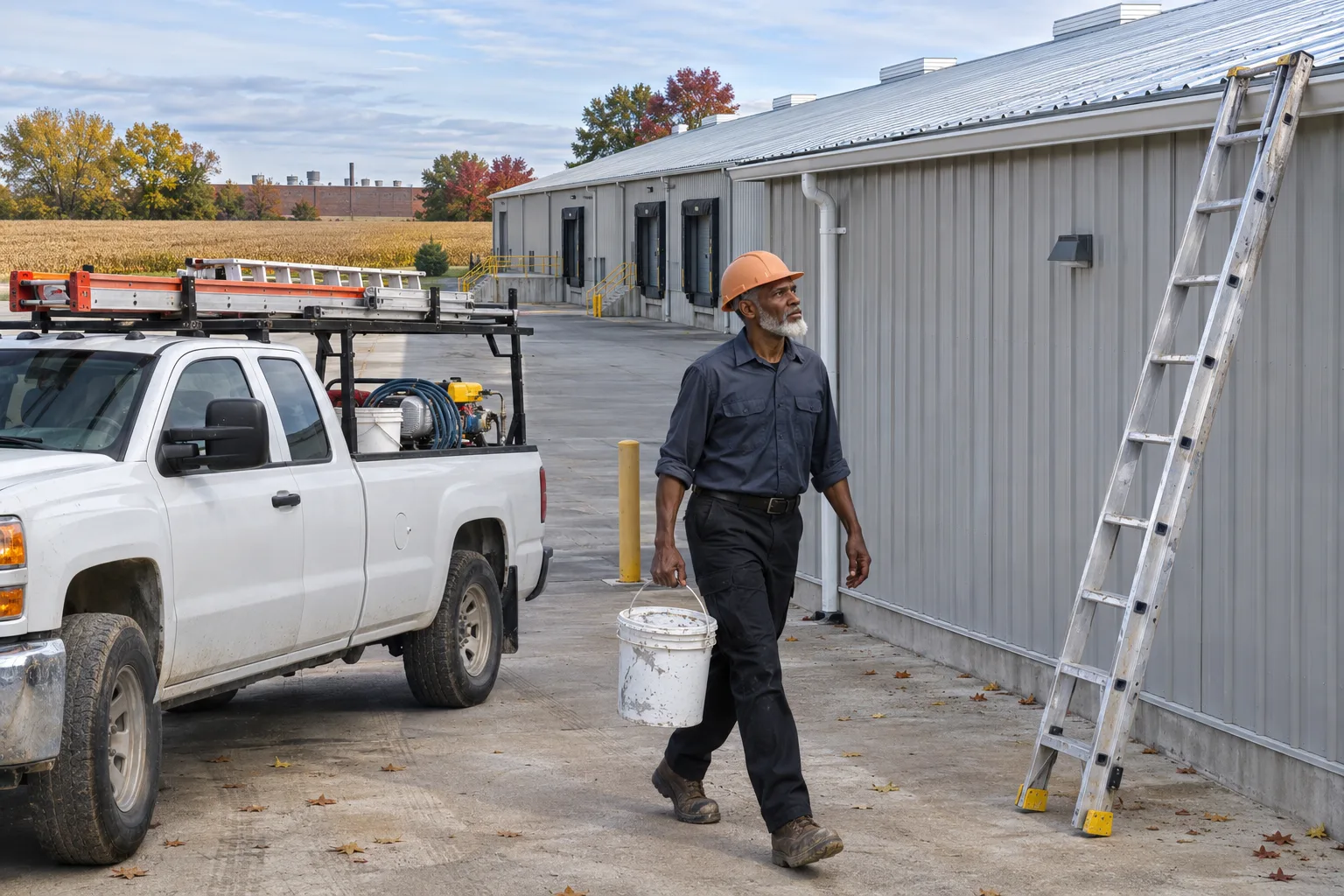
Acrylic is priced within our published range of about $2.50 to $4.00 per square foot after an inspection. Surface prep, rust treatment, the number of coats needed for the target thickness, and roof access set where your building lands. Replacement, at about $5 to $8 per square foot, is the comparison.
Being water-based, acrylic struggles under standing water and must cure before rain or a freezing night. It can also need more coats, or a thicker build, to match other systems. On pitched Anderson metal buildings that drain well it fits; on low spots that pond, silicone is the better match.
Silicone repels acrylic, so a roof that already carries silicone gets silicone again after a wash and spot repairs. If you are unsure what is on your roof, a small adhesion test during the inspection tells us.
Because the coating has to cure before rain, dew, or a cold night reaches it. A forecast that looks fine on Monday can change by Wednesday, and moving a start day costs less than redoing a coat that washed off.
Its life follows the dry film thickness, how well the steel was prepped, and how much foot traffic and debris the roof sees. Regular washing and a recoat when the topcoat chalks thin extend its life on the same base.
Two is common: a base coat and a topcoat in a contrasting color so thin spots show. Rough or heavily weathered steel can need a third pass to reach the target thickness.
Send the roof size for a ballpark range, or call to set up a roof walk ahead of the warm months.