Fasteners
Fastener Sealing Before Coating
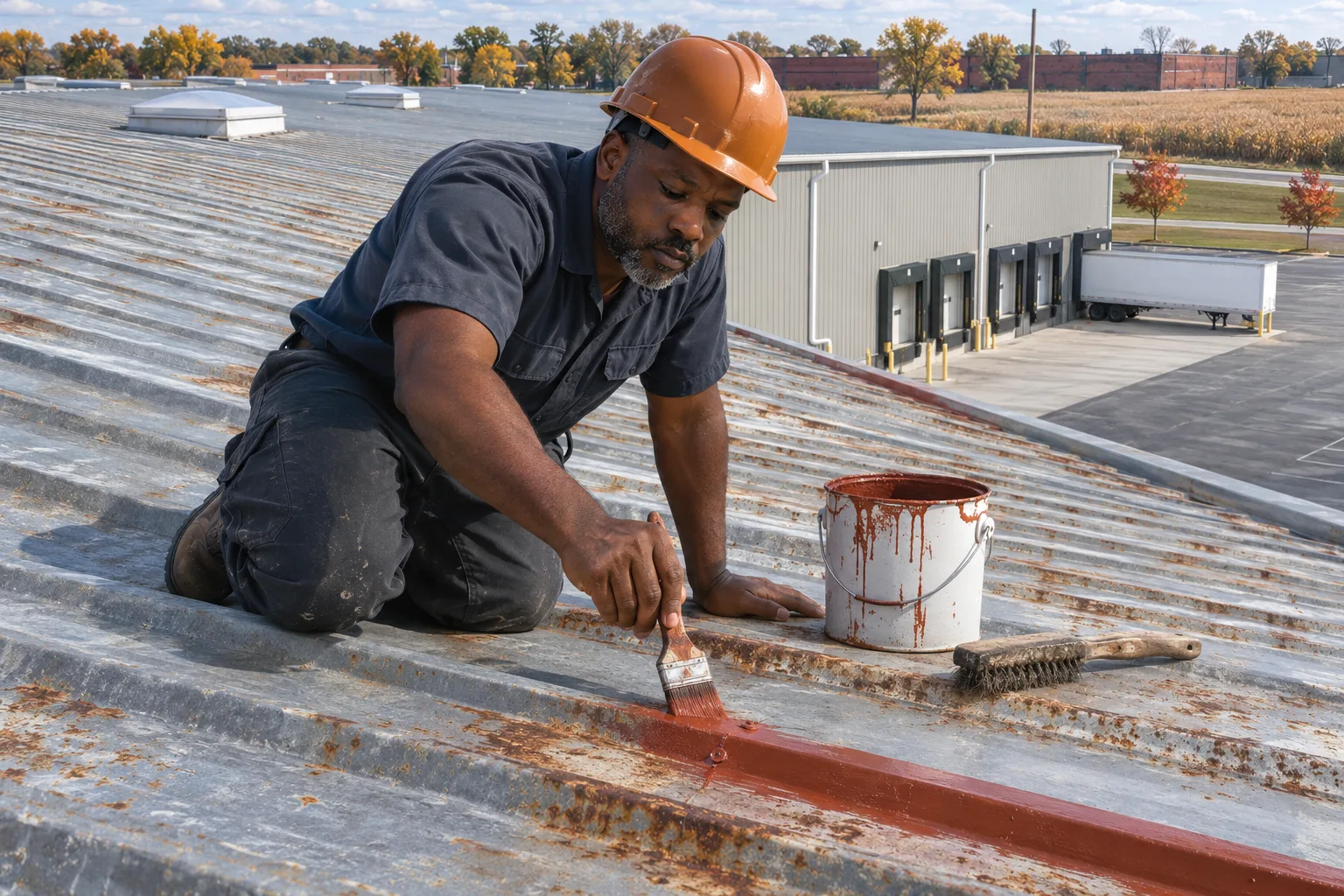
Raised screw heads are where coating wears through first. Each one is tightened or upsized, the washer is checked, and the head gets its own dab of sealant before the base coat.
As an Anderson commercial metal roof coating contractor, we restore exposed-fastener and standing-seam steel roofs on plants, warehouses, and shops with sealed details and measured coats.
Anderson commercial metal roof coating fits steel that is worn on the surface but still firm. Use the rows to see where your roof lands.
| What You See On The Roof | Coat Now | Repair, Then Coat | Look at Replacement |
|---|---|---|---|
| Faded, chalky finish on firm panels | Usually Fits | Rarely | Rarely |
| Screws backing out along the purlins | Sometimes | Usually Fits | Rarely |
| Rust bloom around screw heads | Sometimes | Usually Fits | Rarely |
| Holes rusted through at the eaves | Rarely | Usually Fits | Sometimes |
| Insulation soaked under several panels | Rarely | Sometimes | Usually Fits |
Most plant and warehouse roofs land in the middle column: a round of fastener and lap repairs, then coating.
We sort every metal roof by the conditions below before choosing primer, sealant, and coating thickness.
Raised screw heads are where coating wears through first. Each one is tightened or upsized, the washer is checked, and the head gets its own dab of sealant before the base coat.
Long panel runs move the most with temperature swings, and their side laps pull open first. Fabric set in base coat bridges each lap so the movement leaves the topcoat intact.
Dents alone rarely stop the coating from bonding. Split laps, cracked panels, and screws knocked loose are fixed first, and any open claim should be documented before repairs begin.
Flaking scale is scraped and wire-brushed to a firm edge, then primed with a rust-inhibiting coat. Panels with holes are patched or replaced instead of coated over.
When part of a metal roof needs something other than the standard system, these are the four other options we install in Anderson.
Low-slope connectors and flat bays between pitched sections often hold water. Silicone covers those spots while the steel around them takes the metal system.
Silicone Roof Coating in Anderson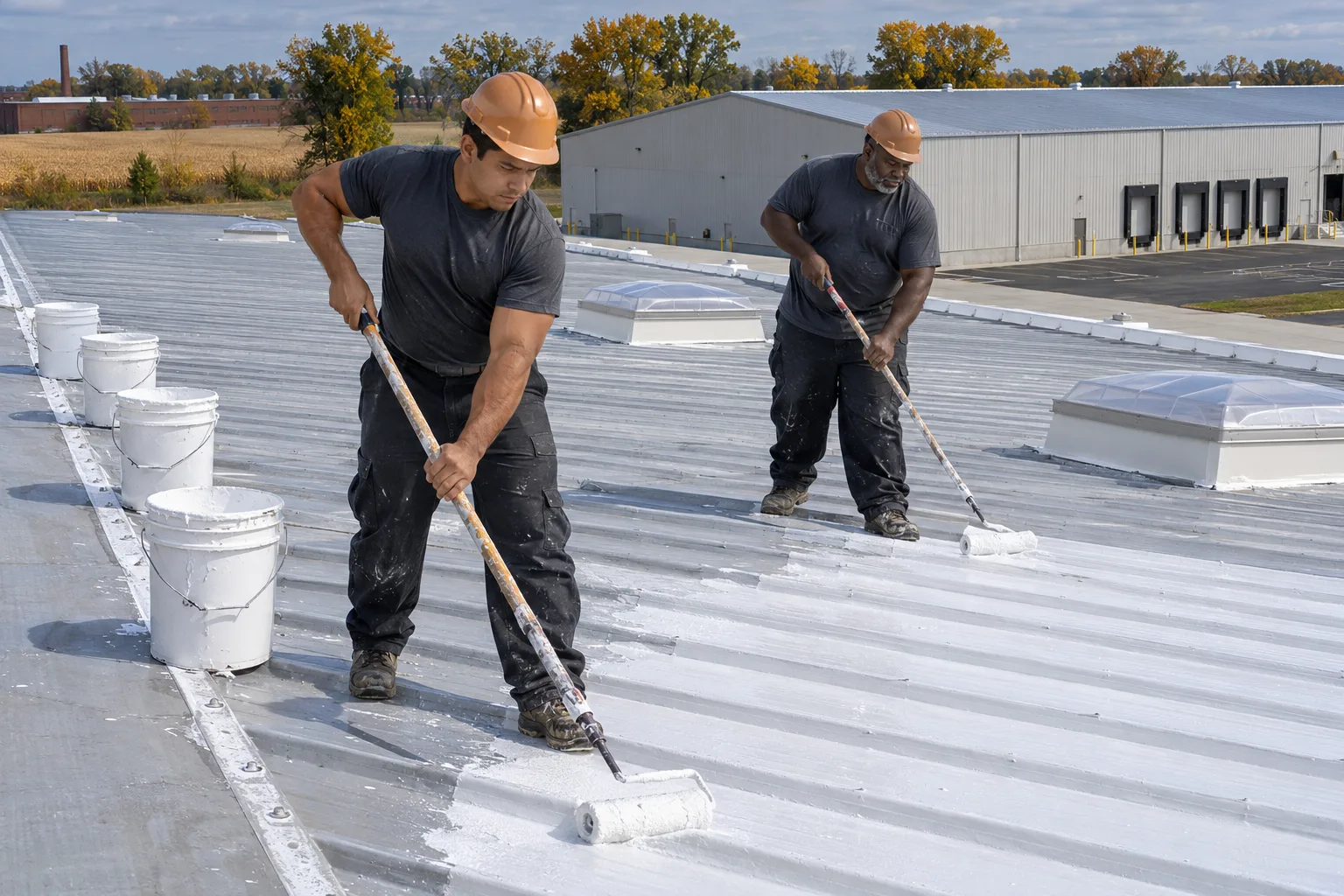
Pitched steel that drains quickly can go acrylic for a lower material cost, with simple recoats each cycle.
Acrylic Roof Coating in Anderson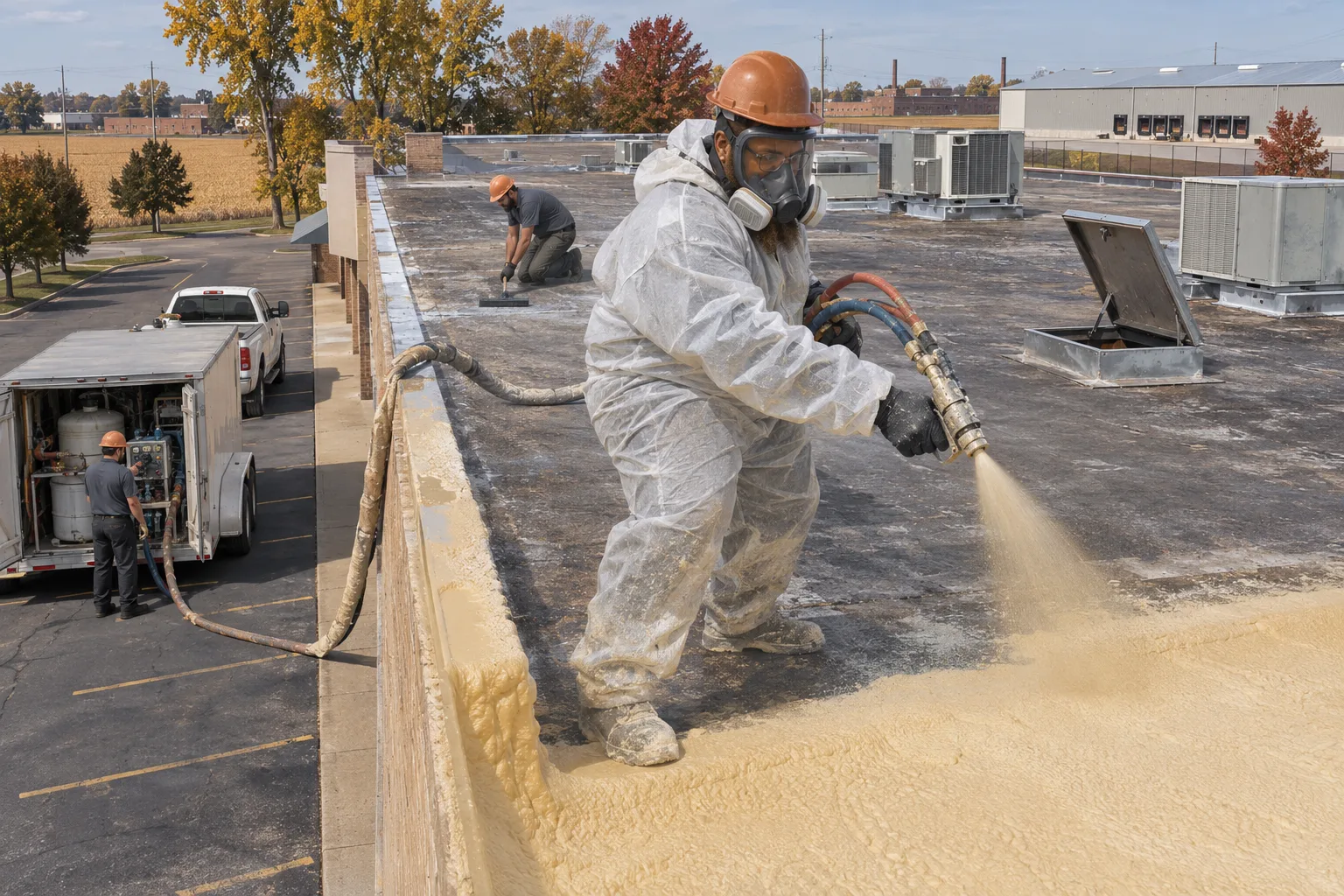
Buildings that leak at hundreds of screws and lose heat through the roof can take foam over the panels, covered by a protective coat.
Spray Foam Roofing in Anderson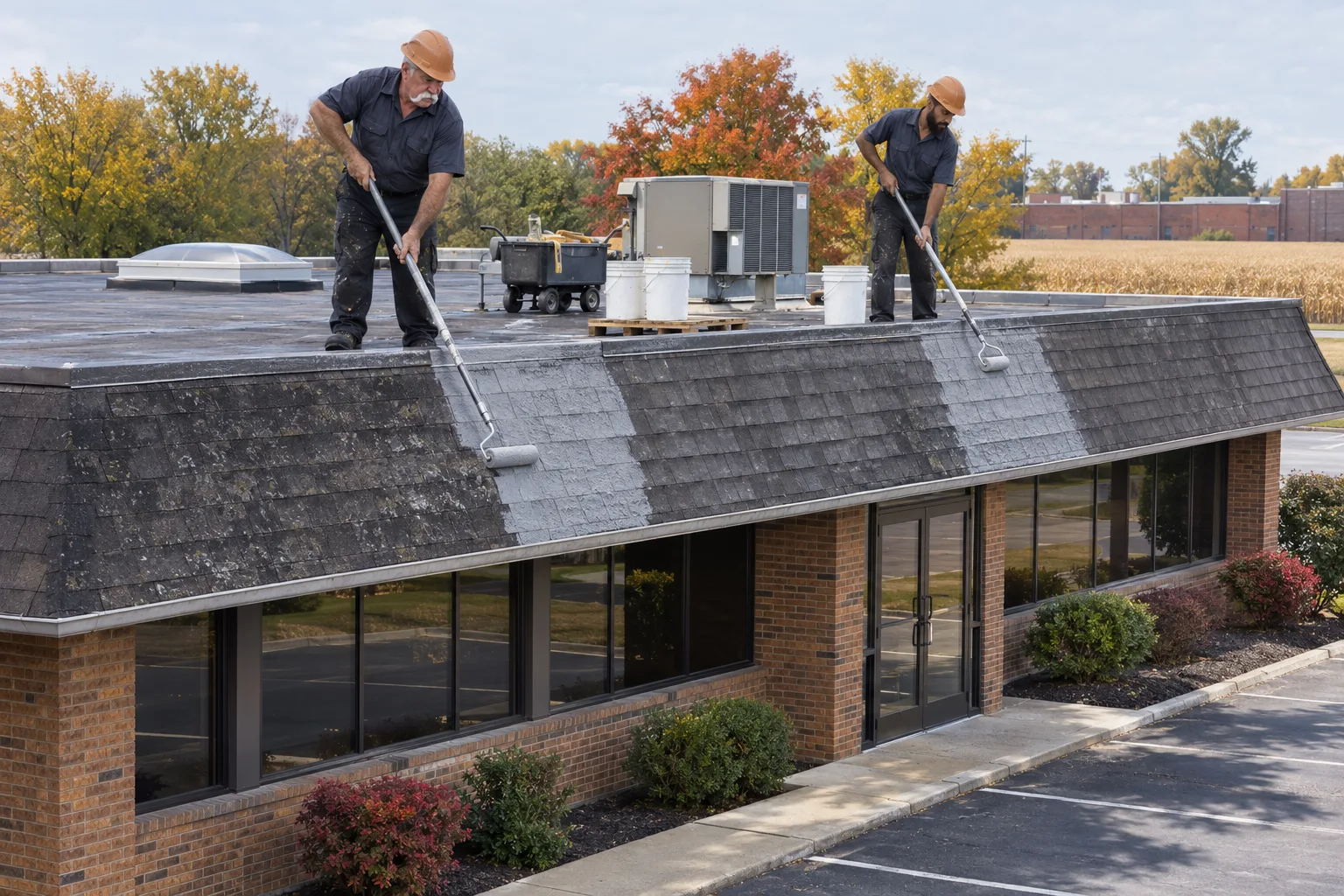
Shingle wings and offices attached to a metal building can be coated in the same project if the shingles still lie flat.
Shingle Roof Coating in AndersonOn commercial steel, the gains come from sealing the details and adding a new surface layer over panels that still have life.
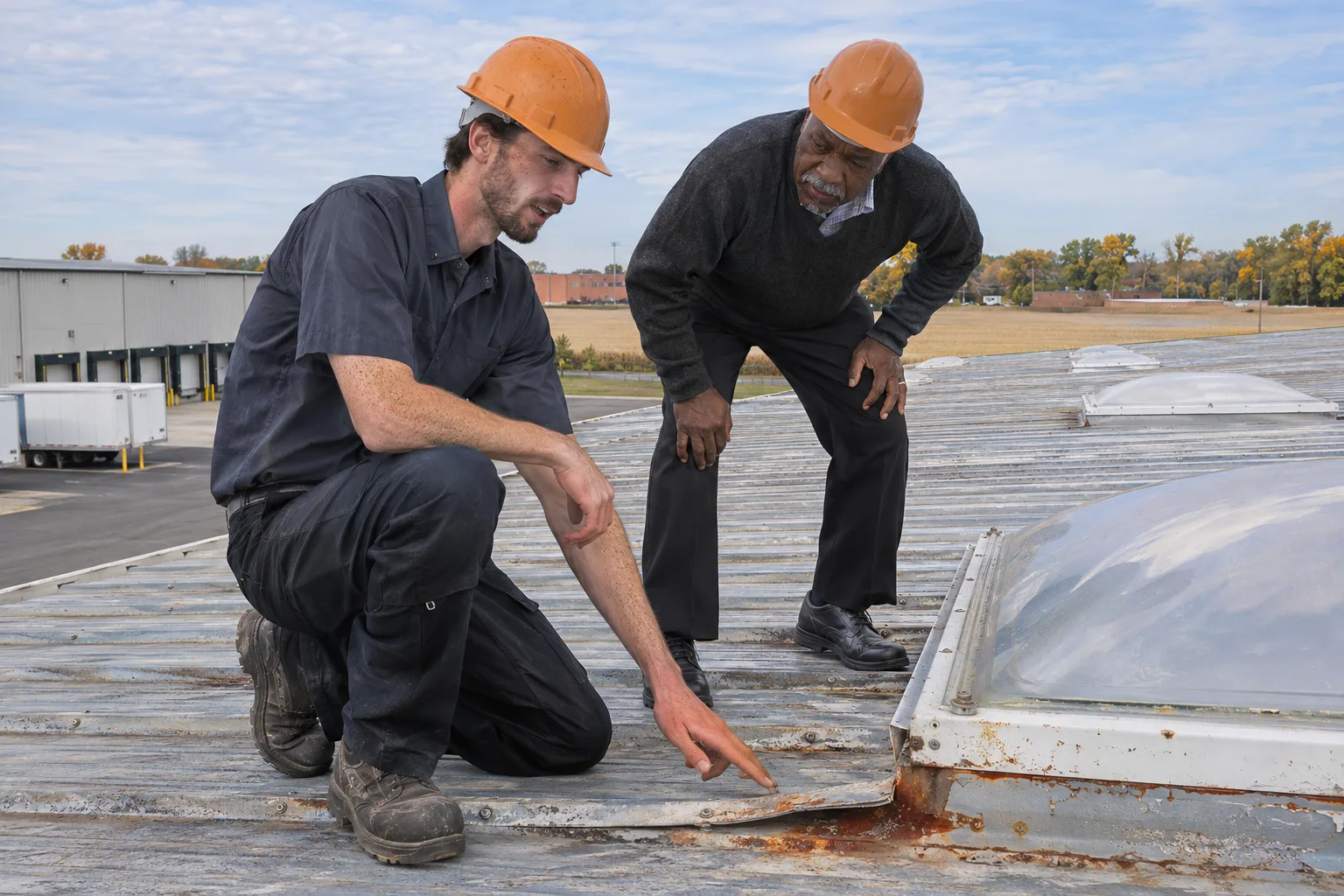
Crews stay on the roof surface, so lines, offices, and shipping run on their normal schedule under the section being coated.
Sealed screws and reinforced laps remove the details where most metal roof leaks begin.
A light topcoat reflects sunlight that bare or faded steel absorbs, which helps keep rooms under the roof cooler in July.
The product and thickness go in your job record, so the next recoat matches what is already up there.
Primer and coating cut the steel off from water and air, which slows rust that would keep spreading from each screw hole.
If rust has already opened holes and water is getting in, call. Holes come first, before any coating plan.
Call UsPlanning to coat a plant or warehouse roof? A free ballpark range gives you a budget number to start from.
Get A Free Ballpark EstimatePlant and warehouse roofs follow these five stages, worked in sections so the building below stays in use.
We count failed screws, open laps, and rust spots section by section, then mark them on a roof sketch. Panels are checked from inside where ceilings allow, looking for stains and wet insulation.
Roof SketchStripped holes get larger-diameter screws, cracked washers are replaced, and rusted-through spots are cut out and patched with matching steel or replaced as full panels.
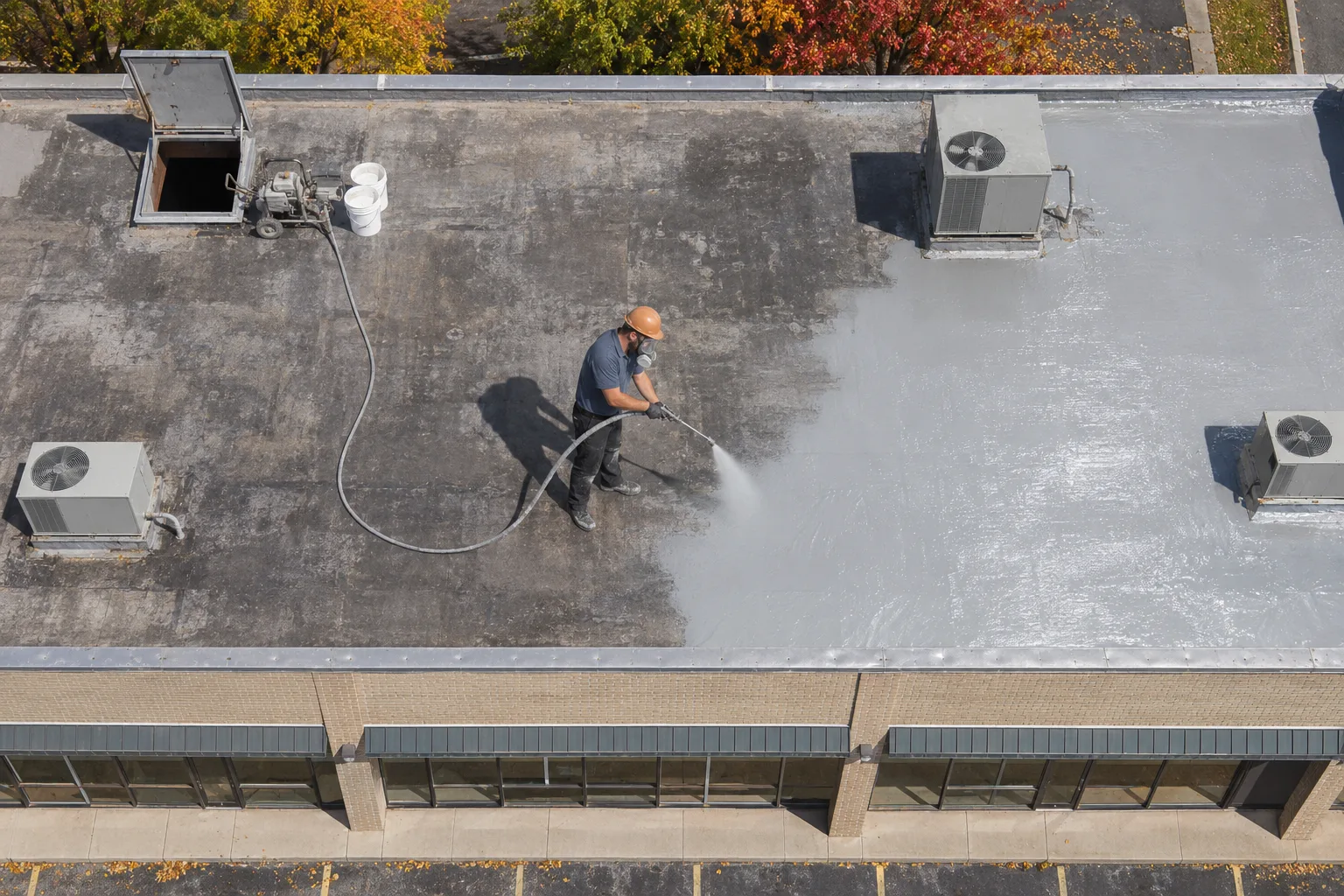
RepairsA pressure wash lifts chalk and grime from the panels. Loose scale comes off with wire brushes, and every bare or rusted area gets a rust-inhibiting primer before sealing.
PrepScrew heads and laps get sealant and fabric first. The base coat follows, then the topcoat, each checked with a wet-film gauge so the full roof reaches its specified mils.
CoatingTogether with you or your manager, we walk the roof, check readings and details, and leave photos, the product name, and the thickness for your building file.
Records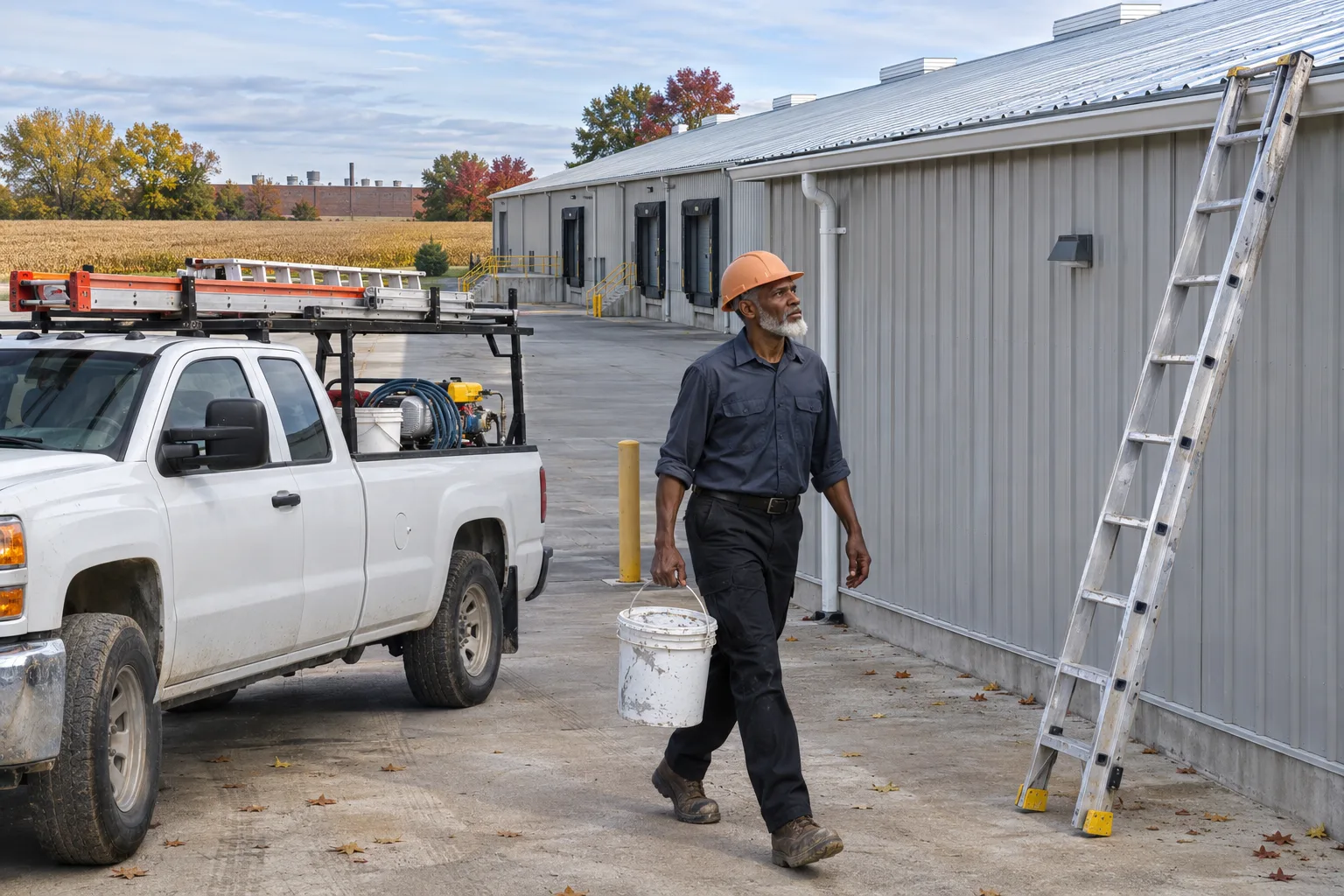
These are the roofs we coat most. Every exposed screw is a possible leak, so each one is tightened or upsized and sealed, side and end laps get fabric or seam sealer, and then the whole field is coated. Standing-seam roofs take the same coating with far less screw work.
Our published coating range is about $2.50 to $4.00 per square foot, with replacement around $5 to $8. A big, open plant roof tends to land lower per foot. Heavy rust, rows of exhaust fans and curbs, and work timed around production shifts move the figure up once the roof is inspected.
Rust is cleaned and treated first, every time. We pressure-wash, take loose scale off with brushes and scrapers, and prime the treated steel. Panels with holes get cut out or replaced. Coating over loose rust is one of the main reasons coatings peel early.
That depends on the coating, the dry film thickness, the prep under it, and what happens on the roof. Exhaust from process fans, foot traffic to equipment, and water near curbs all wear a coating faster. Coatings are often rated for 10 to 20 years by thickness, and inspections plus recoats can stretch that.
Melting snow runs to the eaves, refreezes overnight, and backs water up at gutters and valleys. Ice then pushes that water under laps and around screws, so leaks show at the low ends of panels. Sealed laps and screws plus clear gutters remove most of the ways in.
Standing-seam steel takes coating well and needs far less screw work, since its clips sit hidden under the seams. Prep centers on cleaning, priming any rust at seams and panel ends, and sealing penetrations before the coating covers the full roof.
Send the roof size for a ballpark range, or call to book a roof walk at your plant or warehouse.