Over Metal
Spray Foam Roof Over Metal Panels
Foam goes straight onto cleaned, rust-treated, fastened-down panels. It fills the ribs, buries every screw, and forms one continuous layer that a coating then protects.
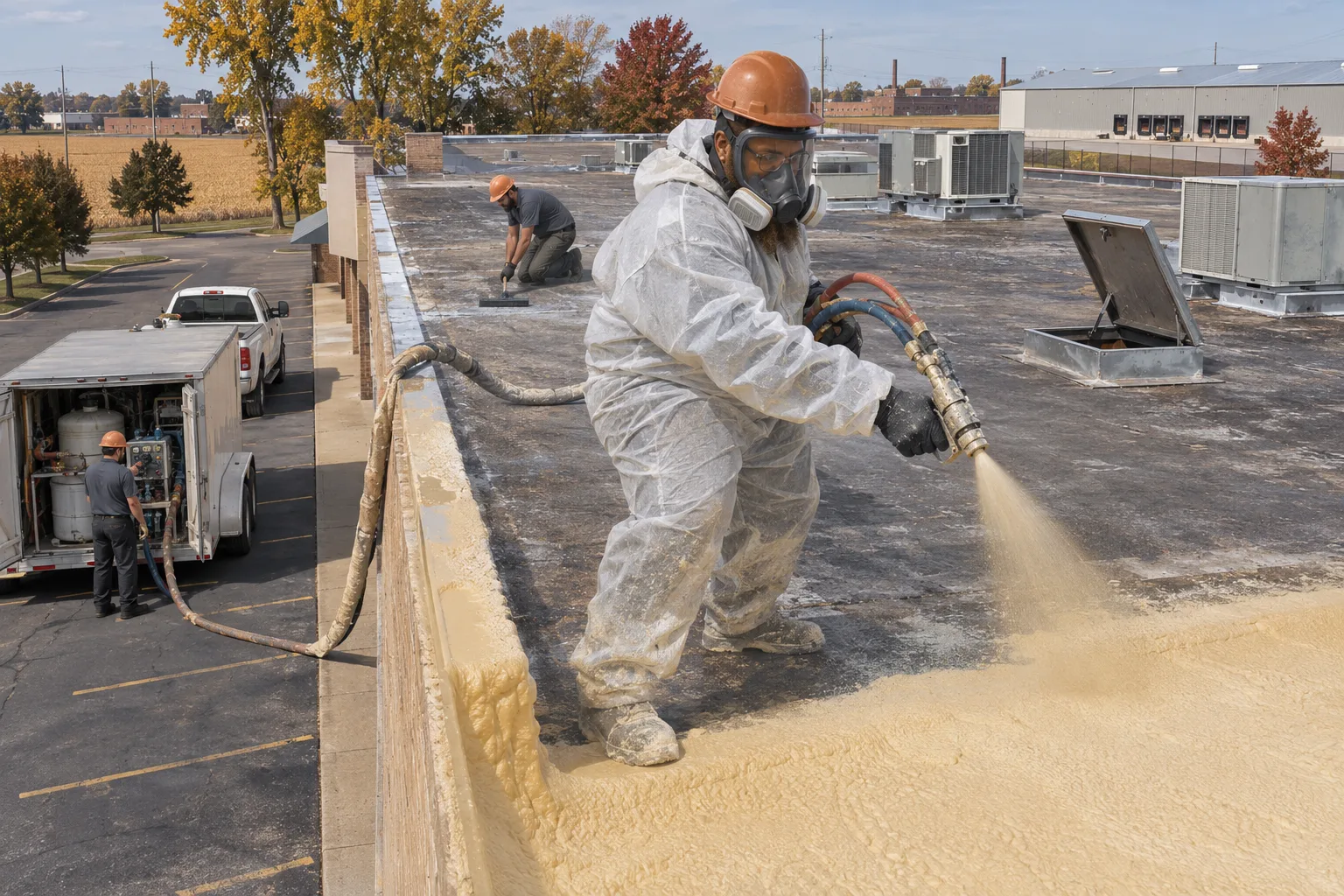
As an Anderson spray foam roofing contractor, we spray foam over cleaned metal or flat roofs, then protect it with a coating that keeps sunlight off the foam.
Anderson spray foam roofing fits roofs that need more than a seal. These rows show when foam makes sense and when a coating alone will do.
| What You See On The Roof | Foam Fits | Prep First | Coating Alone |
|---|---|---|---|
| Hundreds of leaking screws across old steel | Usually Fits | Sometimes | Rarely |
| Building that loses heat through the roof | Usually Fits | Rarely | Sometimes |
| Flat areas that pond after rain | Usually Fits | Sometimes | Sometimes |
| Panels firm, screws tight, finish faded | Rarely | Rarely | Usually Fits |
| Wet insulation under the deck | Rarely | Usually Fits | Rarely |
Foam needs a dry, firm surface. Wet insulation is cut out and replaced before any foam goes down.
Foam solves several problems at once, but the roof under it has to be ready. These are the conditions we look for.
Foam goes straight onto cleaned, rust-treated, fastened-down panels. It fills the ribs, buries every screw, and forms one continuous layer that a coating then protects.
Rigid foam on top of the deck slows heat loss through the roof during Indiana winters and closes air leaks at old seams. Thickness is sized to the building's use.
Spraying over wet insulation traps the water. Soft or stained areas are opened, dried out, or replaced before spraying starts.
Overspray can travel. Intakes are covered, units are shut down near the spray line, and parked cars are moved or shielded on spray days.
Foam is the heaviest-duty option we offer. These four systems cover roofs that need less, or the sections foam leaves alone.
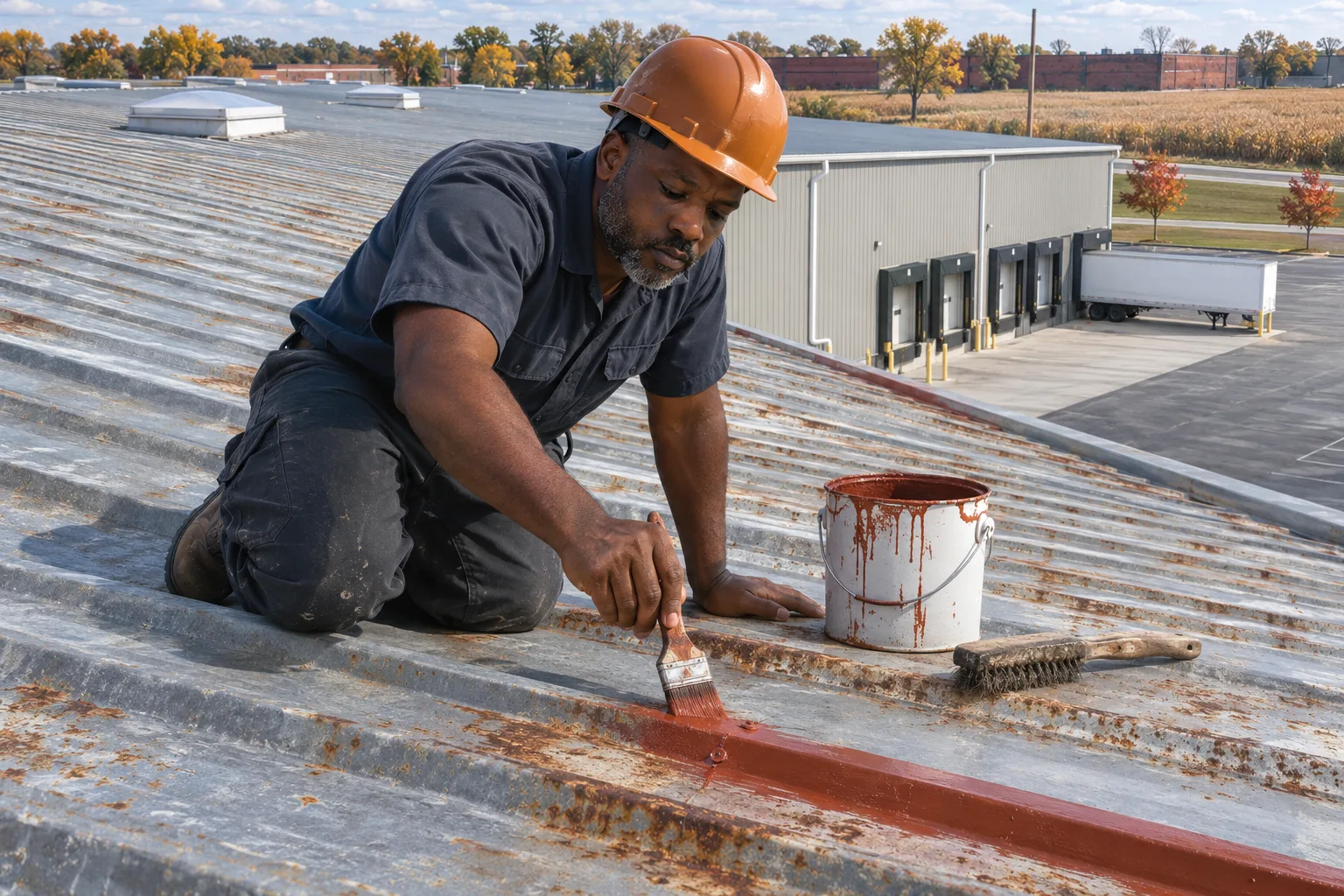
Steel roofs with firm panels and a manageable number of leaks can skip foam and take the metal coating system.
Commercial Metal Roof Coating in Anderson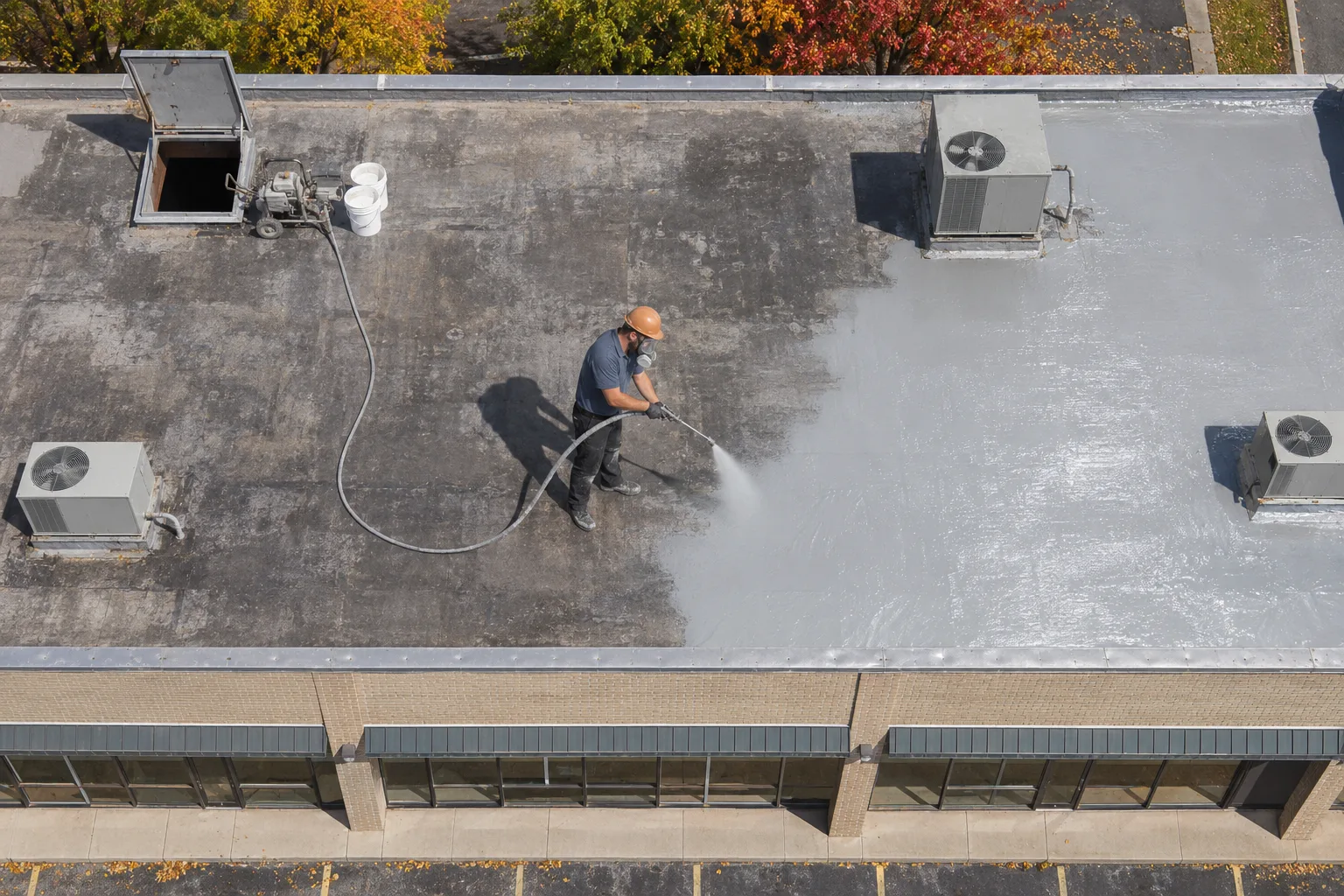
Silicone is the most common topcoat over new foam and also covers flat areas that foam does not reach.
Silicone Roof Coating in Anderson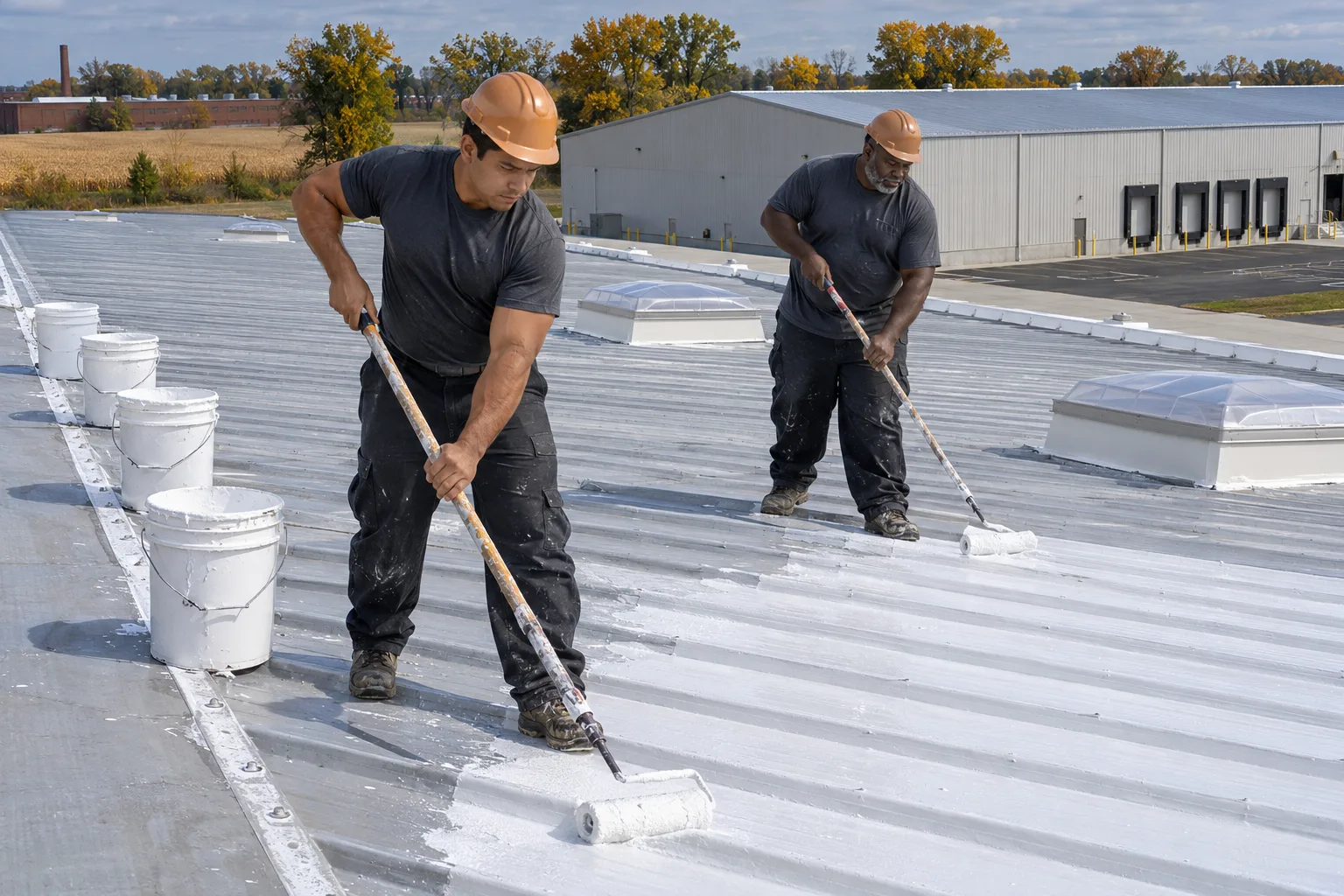
Acrylic can serve as the foam topcoat during warm, dry weeks when the schedule allows.
Acrylic Roof Coating in Anderson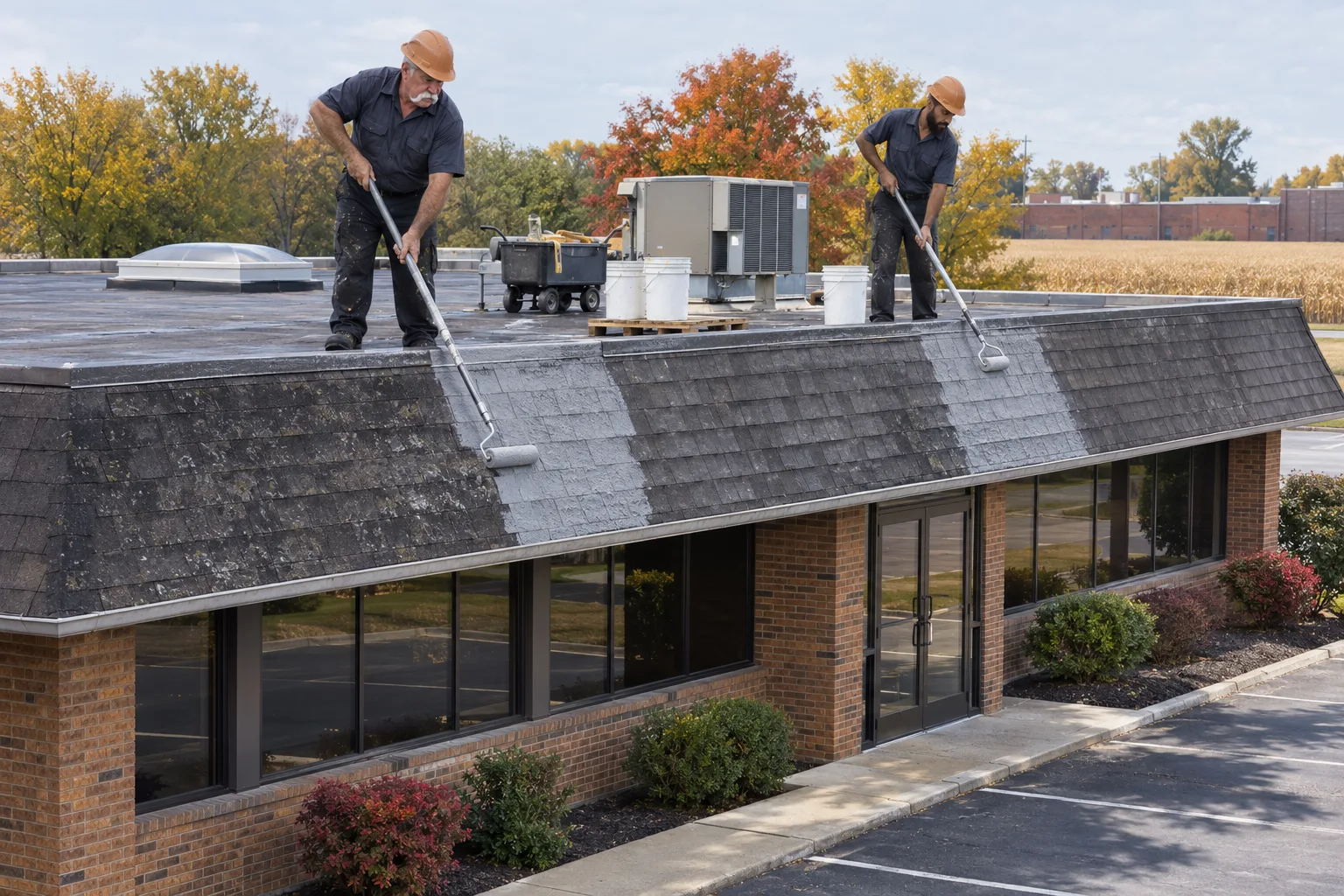
Shingle sections on the building are coated with a shingle product instead of foamed.
Shingle Roof Coating in AndersonFoam changes how the roof handles water and heat. These are the gains owners notice.
The foam layer slows heat moving through the roof in both directions, so rooms under it swing less with the weather.
Low areas are built up with extra foam, so water drains to gutters instead of sitting in the same spots.
Foam buries fasteners and seams under one layer, removing the gaps where old steel roofs usually leak.
Existing panels stay in place as the base, which keeps old roofing out of the dumpster and the building closed in during the job.
When drips show up all over a steel roof, call. We will ask how the building is used before the roof walk.
Call UsWeighing foam against a coating? Start with a free ballpark range for your roof size.
Get A Free Ballpark EstimateFoam jobs run through five stages, and weather plus wind decide the spray days.
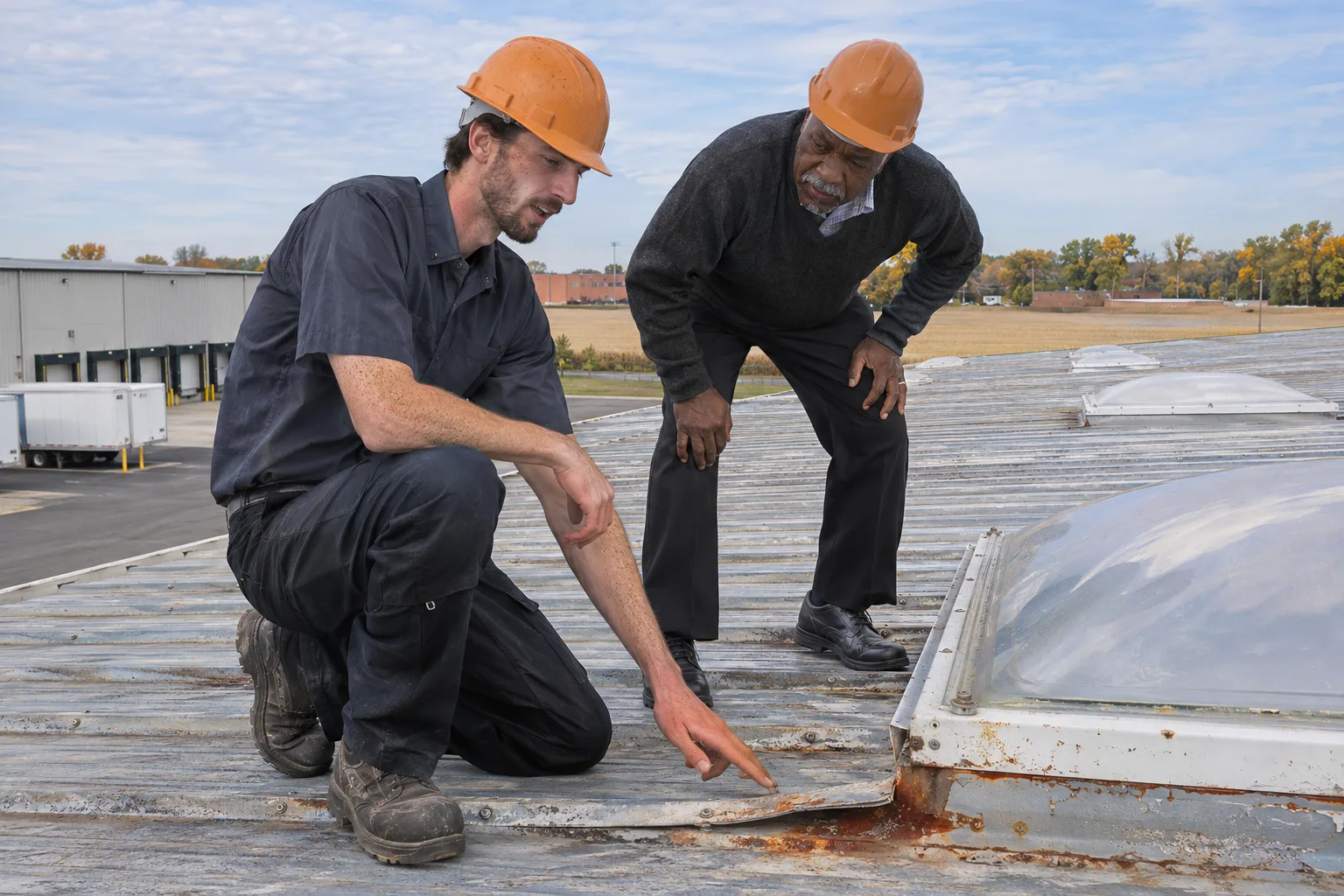
We check panel attachment, look for wet insulation with a moisture meter, and note every intake, unit, and parking area within reach of overspray.
Moisture CheckLoose panels are fastened down, rust holes are patched, and wet insulation is cut out and replaced so the foam goes on a dry, firm base.
RepairsPanels are washed and rust is primed. Intakes are covered, nearby cars are moved, and units close to the spray line are shut down for the day.
PrepFoam goes on in passes to the planned thickness, with extra built up at low spots. The protective coating follows soon after so sunlight never reaches bare foam for long.
Foam And CoatingThickness is probed across the roof and logged. You get the readings, the coating used, and a recoat schedule for the topcoat.
Records
Foam is priced after an inspection because thickness, panel condition, and access vary so much. For reference, our published range runs about $2.50 to $4.00 per square foot for coating systems and about $5 to $8 for replacement. Thicker foam, more rust repair, and more rooftop equipment push an Anderson job higher.
Usually, for leaks at seams, laps, and screws, since foam seals the whole surface in one layer. Rusted-through panels, failed curbs, and damaged flashing still get fixed first. Drips caused by condensation inside the building are a separate problem that exterior foam can leave unsolved.
Thickness is set by the insulation the building needs and how much the low areas must be raised. It is checked with a probe during spraying and written into the job record you keep.
Very little. Foam is light compared with a second layer of steel or a ballasted roof, and the wet insulation removed during prep often weighs more than the foam that replaces it.
Mostly the topcoat. Walk the roof once a year, clear outlets, and look for nicks or worn spots in the coating. When the topcoat wears thin, it is washed and recoated, which keeps sunlight off the foam underneath.
Foam needs surface and air temperatures inside the maker's range, a dry roof, and calm wind. In Anderson that means spring through fall for most projects, with exact days set by the forecast and a moisture reading on the morning of spraying.
Send the roof size for a ballpark range, or call to set up a moisture check and roof walk.