Ponding
Silicone Coating Over Ponding Water
Puddles at low gutters, valleys, and sagging panels are the reason most owners ask for silicone. We still trace why water sits there, since added weight and debris need attention too.

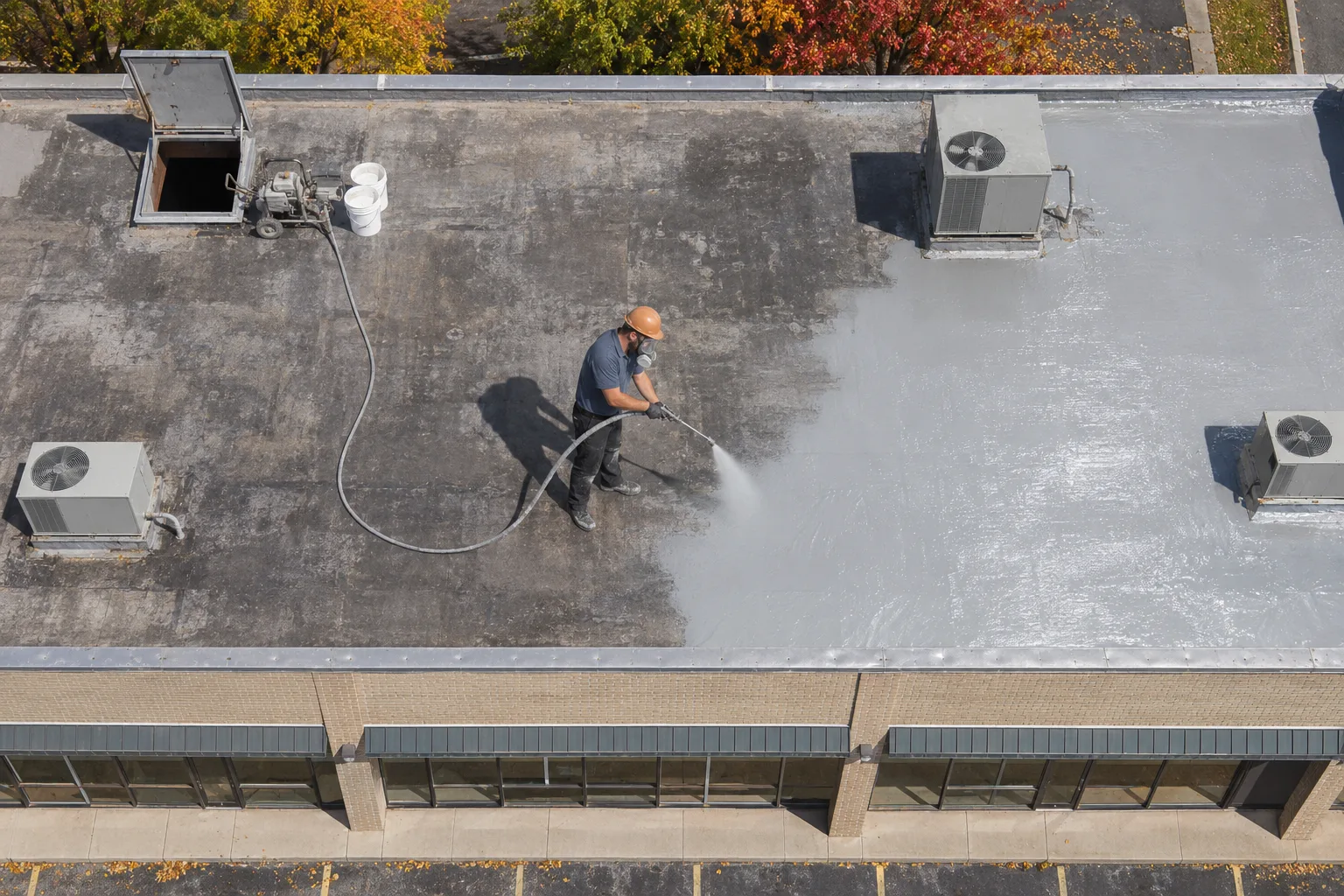
As an Anderson silicone roof coating contractor, we coat low-slope metal and flat sections where water lingers, after the drains, laps, and screws are sealed.
Anderson silicone roof coating earns its place on the sections that hold water. These rows show where it fits and where another system does better.
| What You See On The Roof | Silicone Fits | Prep First | Another System |
|---|---|---|---|
| Puddles that last a day or two after rain | Usually Fits | Sometimes | Rarely |
| Flat connector between two pitched roofs | Usually Fits | Sometimes | Rarely |
| Steep panels that drain in minutes | Sometimes | Rarely | Usually Fits |
| Existing acrylic coating still attached | Sometimes | Usually Fits | Sometimes |
| Soft spots from wet insulation | Rarely | Usually Fits | Sometimes |
Silicone over an old acrylic layer needs a primer and an adhesion test first, and wet insulation is cut out before any coating.
Silicone grips well and sheds standing water, but these conditions decide how much prep comes first.
Puddles at low gutters, valleys, and sagging panels are the reason most owners ask for silicone. We still trace why water sits there, since added weight and debris need attention too.
Silicone goes on in cooler weather than acrylic, but the roof has to be dry and inside the maker limits. Frost, dew, and wet winter days push the start back.
Leaves and grit that block outlets turn a slow drain into a standing pond. Outlets are cleared and checked so water leaves the moment it can.
An existing acrylic or asphalt coating changes the primer choice. We run a small adhesion test before silicone goes over any earlier layer.
Silicone rarely covers a whole Anderson roof by itself. These four systems handle the sections around it.
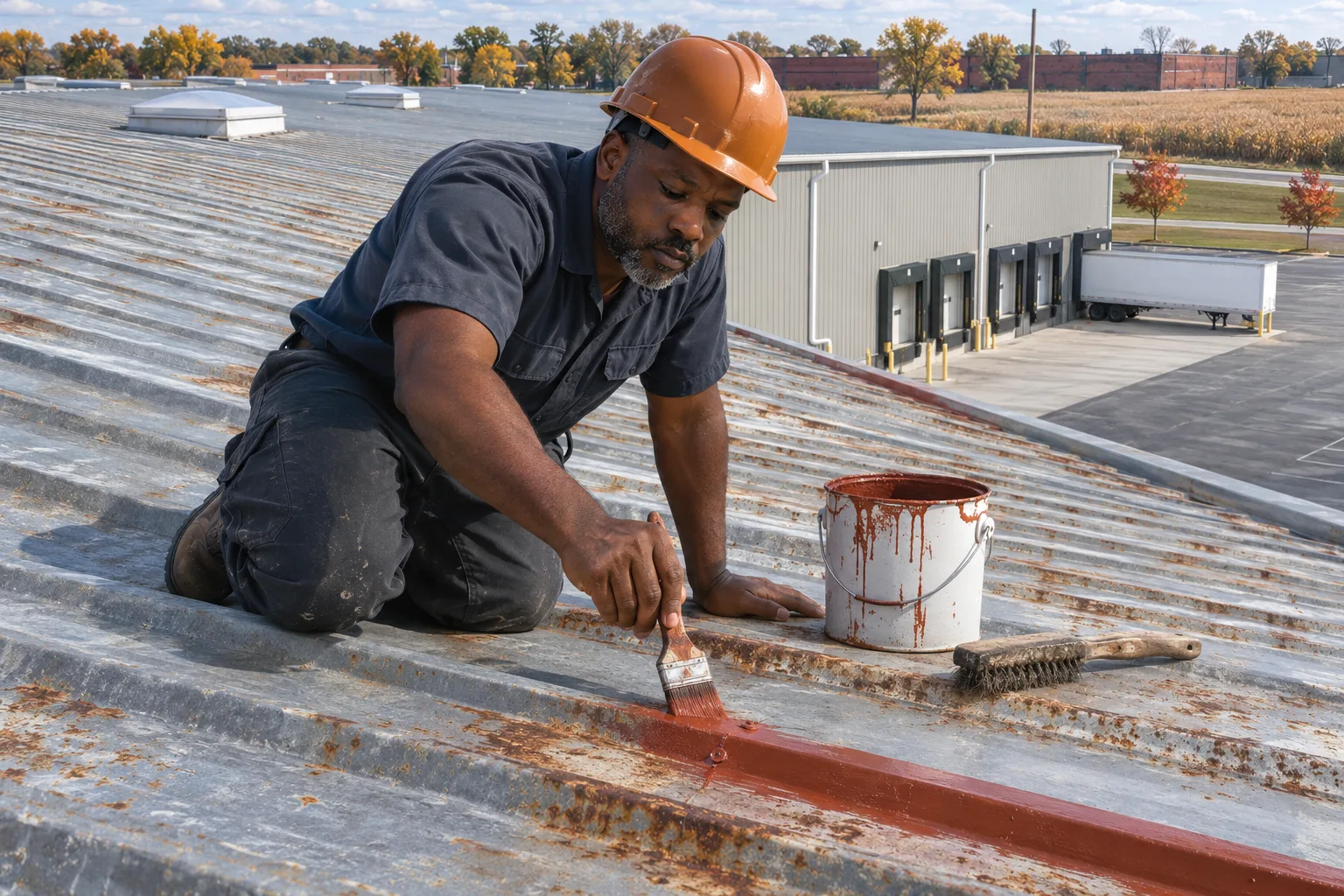
Steel sections that drain well take the commercial metal system, with silicone kept for the low bays where water lingers.
Commercial Metal Roof Coating in Anderson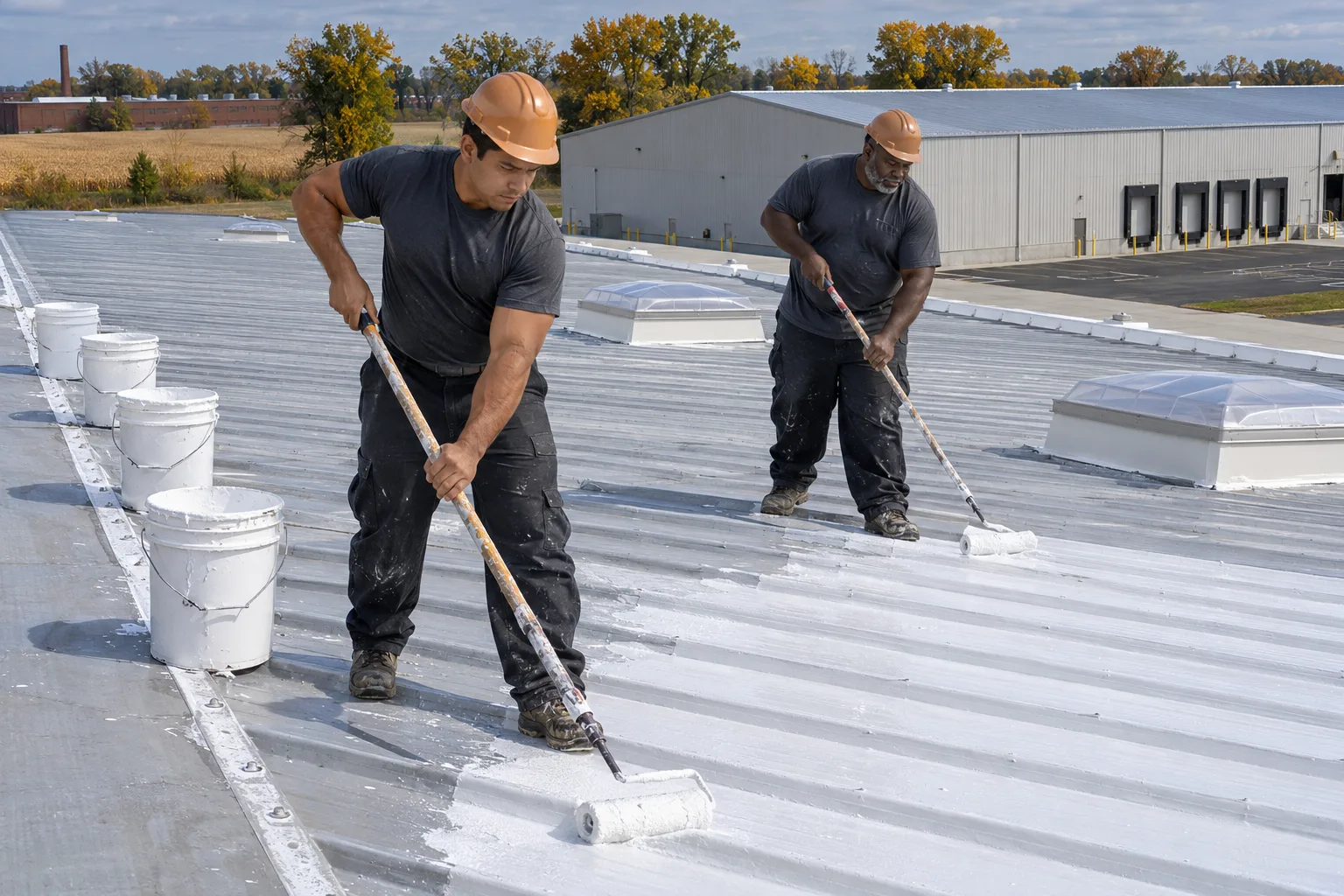
Owners who want lower material cost on pitched panels can pair acrylic up top with silicone in the valleys.
Acrylic Roof Coating in Anderson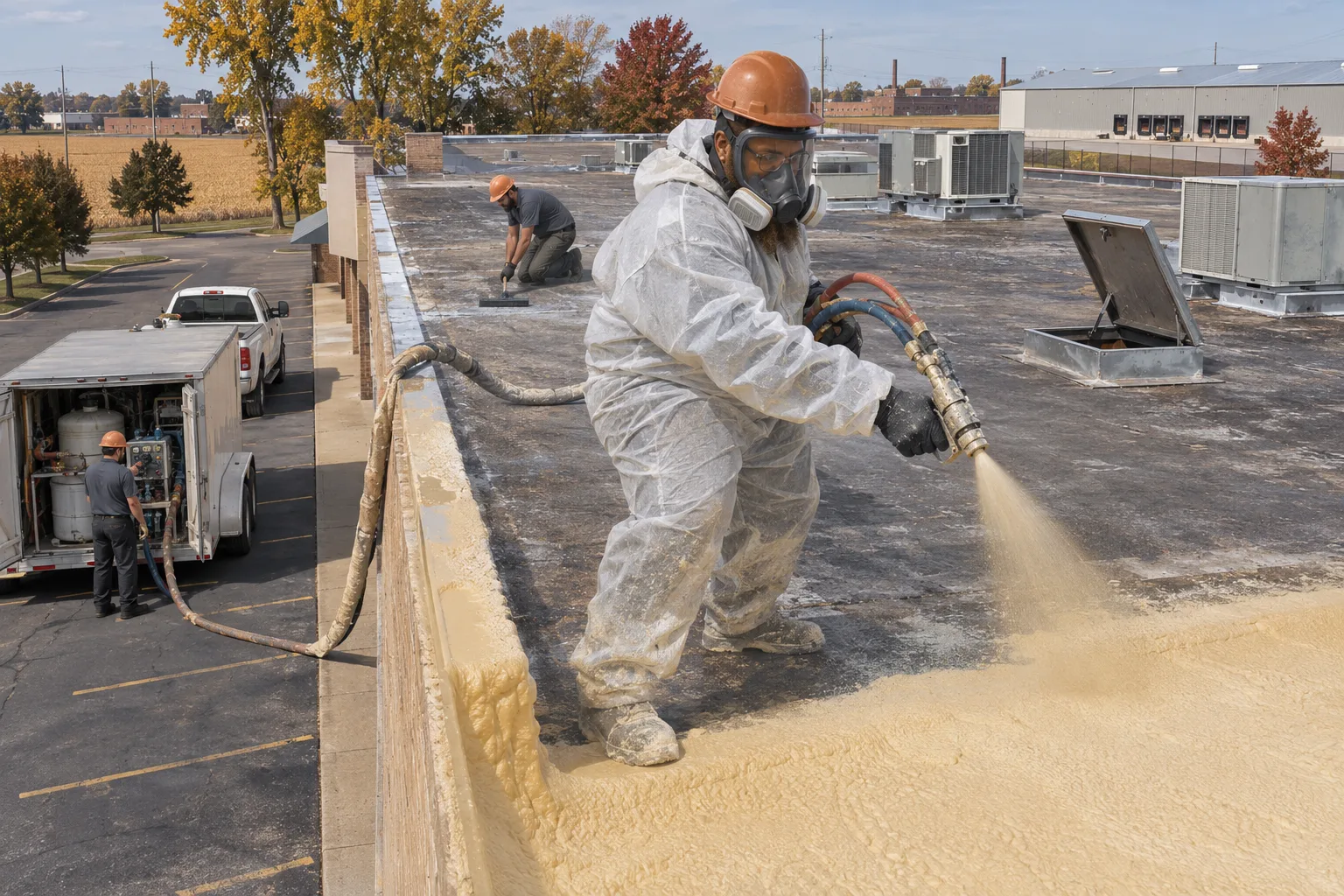
Roofs that hold water across wide areas can take foam to add slope, then silicone as the protective topcoat.
Spray Foam Roofing in Anderson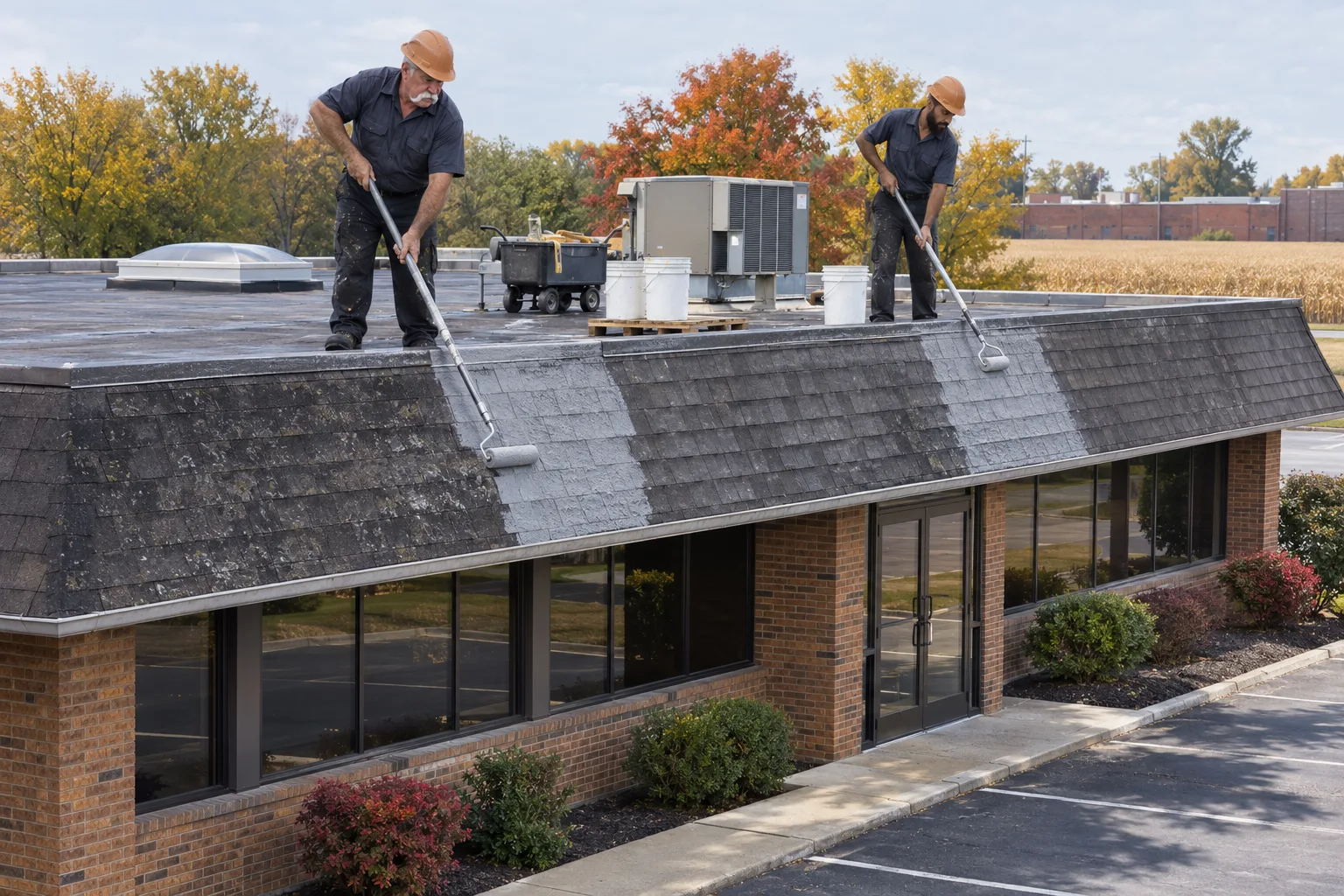
Asphalt shingle sections on the same building are coated with a shingle product while silicone covers the flat parts.
Shingle Roof Coating in AndersonSilicone earns its keep on the parts of a roof that stay wet. This is what owners notice once those areas are sealed.

Silicone resists breaking down under standing water, so low spots that used to fail first hold up with the rest of the roof.
Its cooler-weather window lets fall roof projects finish after acrylic season has closed for the year.
White silicone reflects sunlight back off the panels, which helps the rooms below on summer afternoons.
When it wears, silicone is washed and recoated with silicone, so the next round keeps the same prep plan.
If standing water has found its way inside, call and tell us where the drips land.
Call UsPlanning silicone for the low sections? Get a free ballpark range by roof size before the roof walk.
Get A Free Ballpark EstimateSilicone work follows these five stages, with extra care at drains and anywhere water collects.
We map where water sits after rain, mark low gutters and valleys, and probe for wet insulation under the ponding areas. Screws, laps, and curbs go on the same list.
Water MapDrains and gutters are cleaned out, failed screws replaced, and open laps sealed. Wet insulation found under ponds is cut out and replaced before anything goes on top.
RepairsSilicone needs a clean, dry surface to grip. Panels are washed, allowed to dry, and primed where the maker calls for it, especially over older coatings or bare steel.
PrepDetail areas get reinforced first. The field is then sprayed in passes, with wet-film readings taken so the low spots get the same thickness as the rest of the roof.
CoatingOnce the coating cures, we walk the roof, confirm thickness, clear debris from outlets, and note where water still collects for the yearly maintenance list.
Close-Out
It falls within our published coating range of about $2.50 to $4.00 per square foot, while replacement runs about $5 to $8. Where your warehouse lands depends on coating thickness, the number of coats, screw and lap prep, how much area ponds, and how easy the roof is to reach.
Silicone picks up more dirt than acrylic, which dulls its brightness over time, and it is slippery when wet. Few other coatings stick to it, so recoats are usually silicone again. It also costs more per gallon. On flat or low-slope Anderson roofs, its water resistance usually outweighs those points.
On a dry day inside the maker limits, yes. Silicone tolerates cooler temperatures than water-based coatings, but frost, morning dew, and wet days all push work back. We check surface temperature, dew point, and the overnight forecast before the sprayer starts.
Water that sits under silicone still adds weight, holds debris, and can point to a sagging deck. Clearing outlets and checking the structure first keeps the coating from covering a problem that keeps growing underneath.
In many cases, after cleaning and an adhesion test. The old acrylic has to be firmly attached, and a primer often goes between the two. Peeling acrylic is scraped back to a firm edge before the silicone goes on.
Most jobs use one or two passes to reach the thickness the maker specifies, with an extra pass at details. The reading matters more than the count, so crews check wet-film thickness as they spray and add material where a section comes up short.
Send the size of the low-slope sections for a ballpark range, or call to set up a roof walk.