Stacks
Rust Rings Around Exhaust Stacks
Heat and condensate from stacks break down paint in a ring around each one. That steel is cleaned to bare metal and primed or replaced.
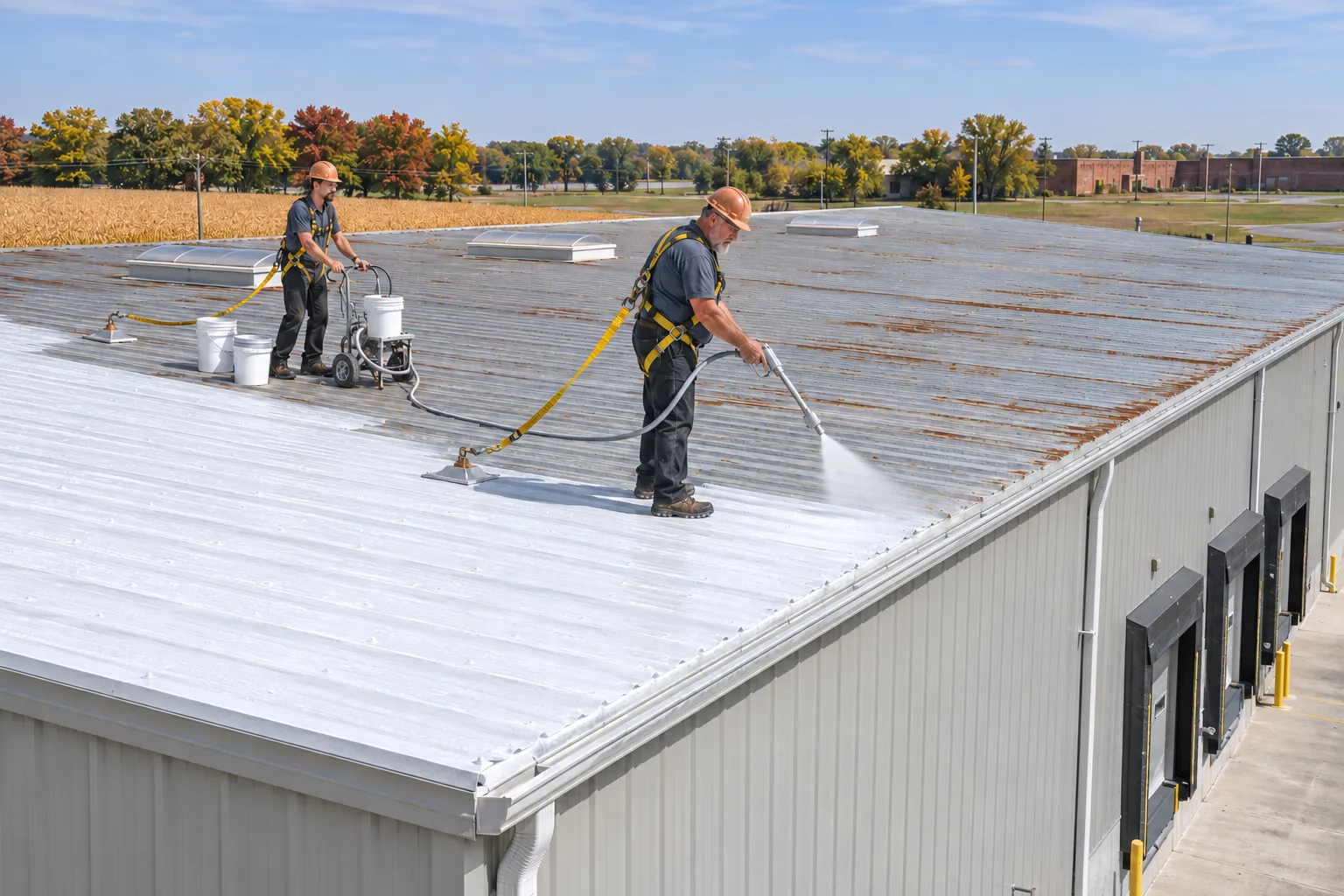
As a Hartford City metal roof coating contractor, we repair and coat industrial roofs crowded with vents, stacks, and fans, replacing rusted-through panels first.
Hartford City metal roof coating on industrial buildings starts at the openings, because that is where the steel fails first.
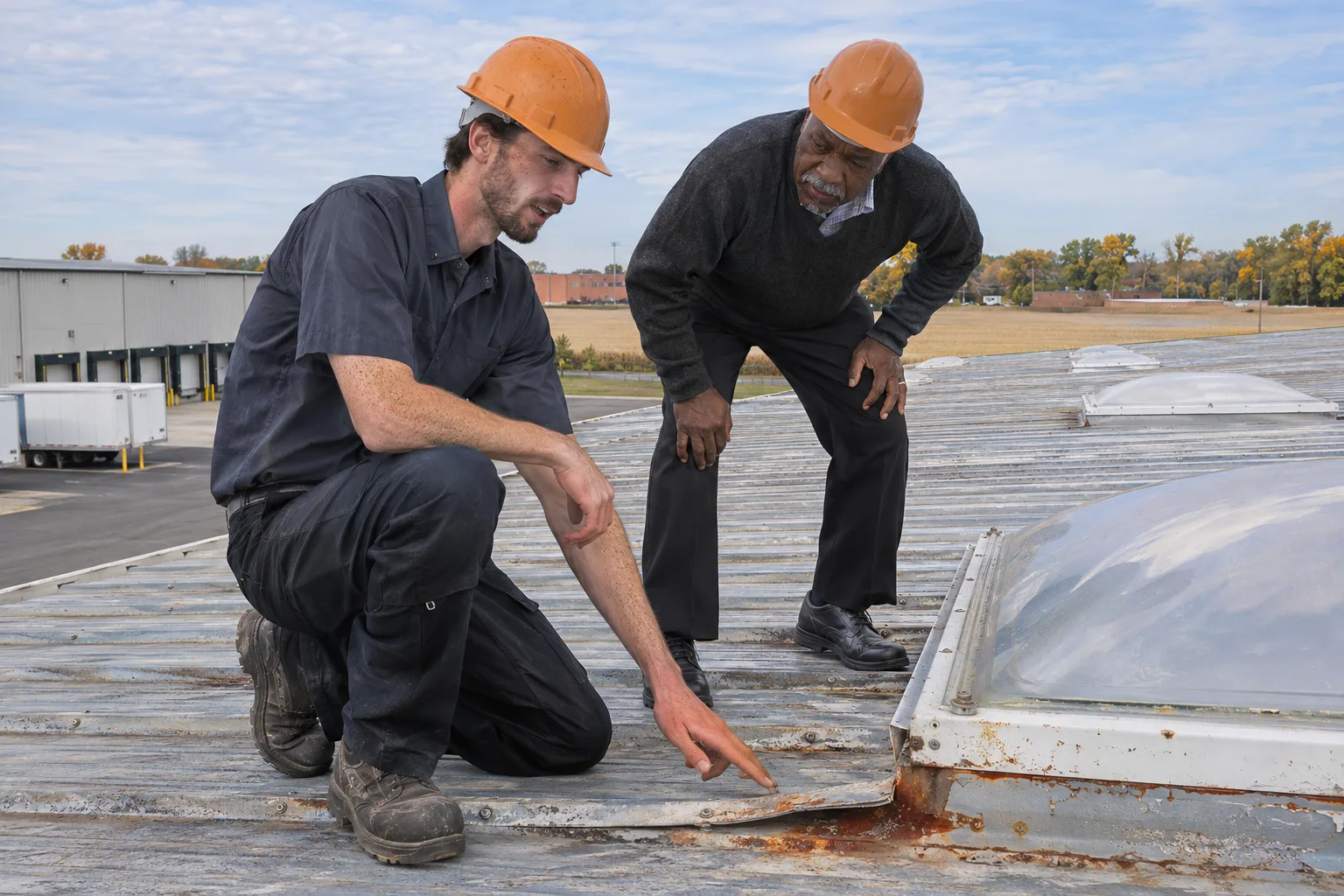
Exhaust, steam, and heat from process equipment wear the panels around stacks and vents faster than the open field. Rust starts at the flashing, spreads under the paint, and opens holes the size of a coin.
Those panels are cut out or replaced, each opening gets new flashing set in sealant and fabric, and only then does coating go over the whole roof, built up thicker around each curb.
Industrial roofs show the same four problems again and again. This is how each one changes the job.
Heat and condensate from stacks break down paint in a ring around each one. That steel is cleaned to bare metal and primed or replaced.
Fan curbs vibrate and loosen their flashing over time. New flashing is set and sealed before the curb sides are coated.
Water that runs past openings and gutters eats through panels from the top. Those panels are swapped instead of patched over.
Leaks near equipment soak the insulation below. Wet sections are found with a meter and replaced before the roof is sealed again.
Starting at the openings pays back on industrial roofs in several ways.
Most plant roof leaks start at stacks, vents, and curbs, and those get rebuilt before the coating goes on.
Equipment shuts down only while crews work right beside it on the roof, and the rest of the plant runs as normal.
Panels with holes are replaced, so the coating covers solid steel across the whole roof.
Each stack, vent, and curb is listed with its repair, which helps when equipment is added later.
Industrial and commercial roofs in Hartford City can take any of these five systems once the openings are fixed.
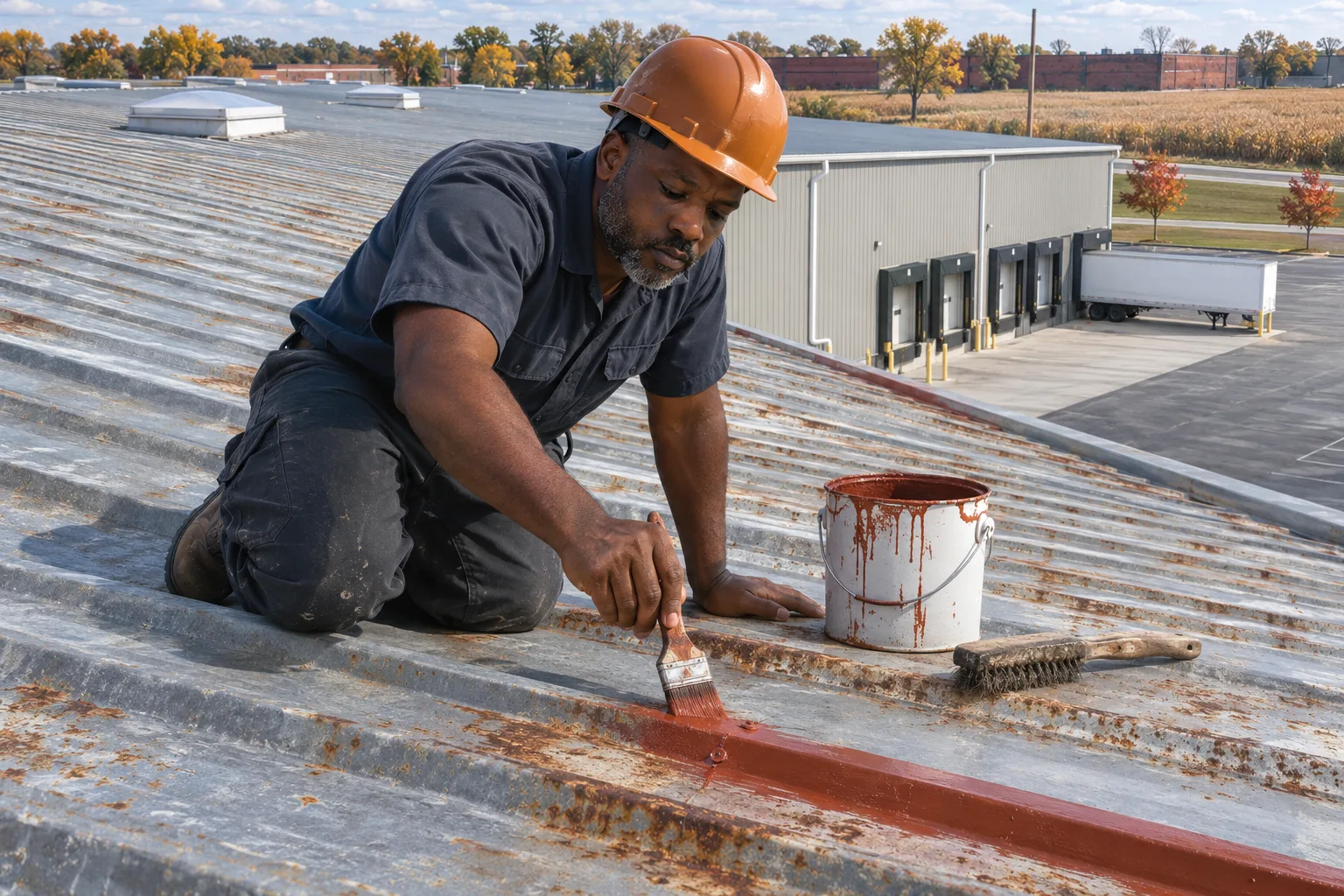
The usual choice for plant steel after stacks, vents, and rust-through panels are repaired.
Commercial Metal Roof Coating details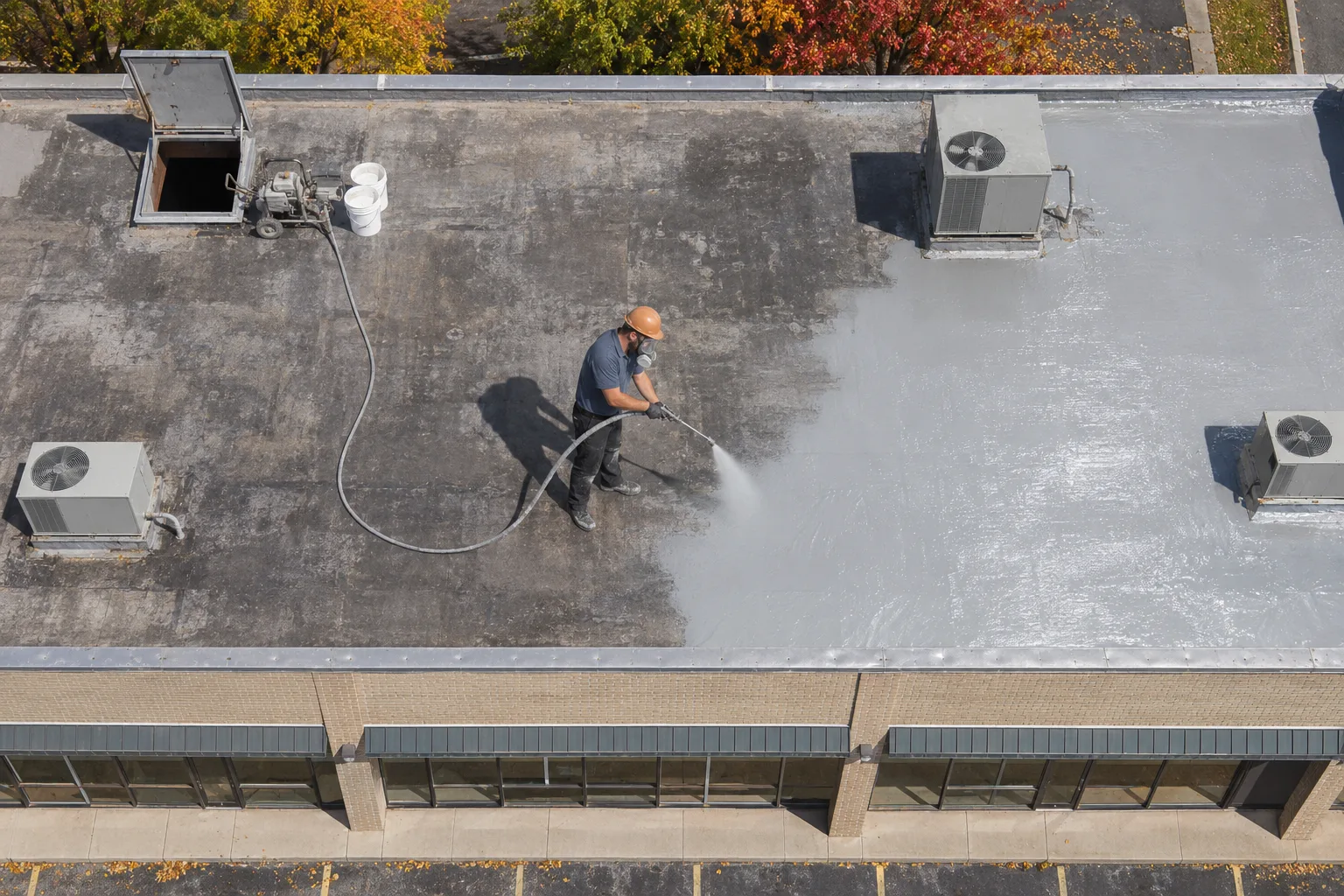
Handles flat sections between process equipment where water collects and condensate drips.
Silicone Roof Coating details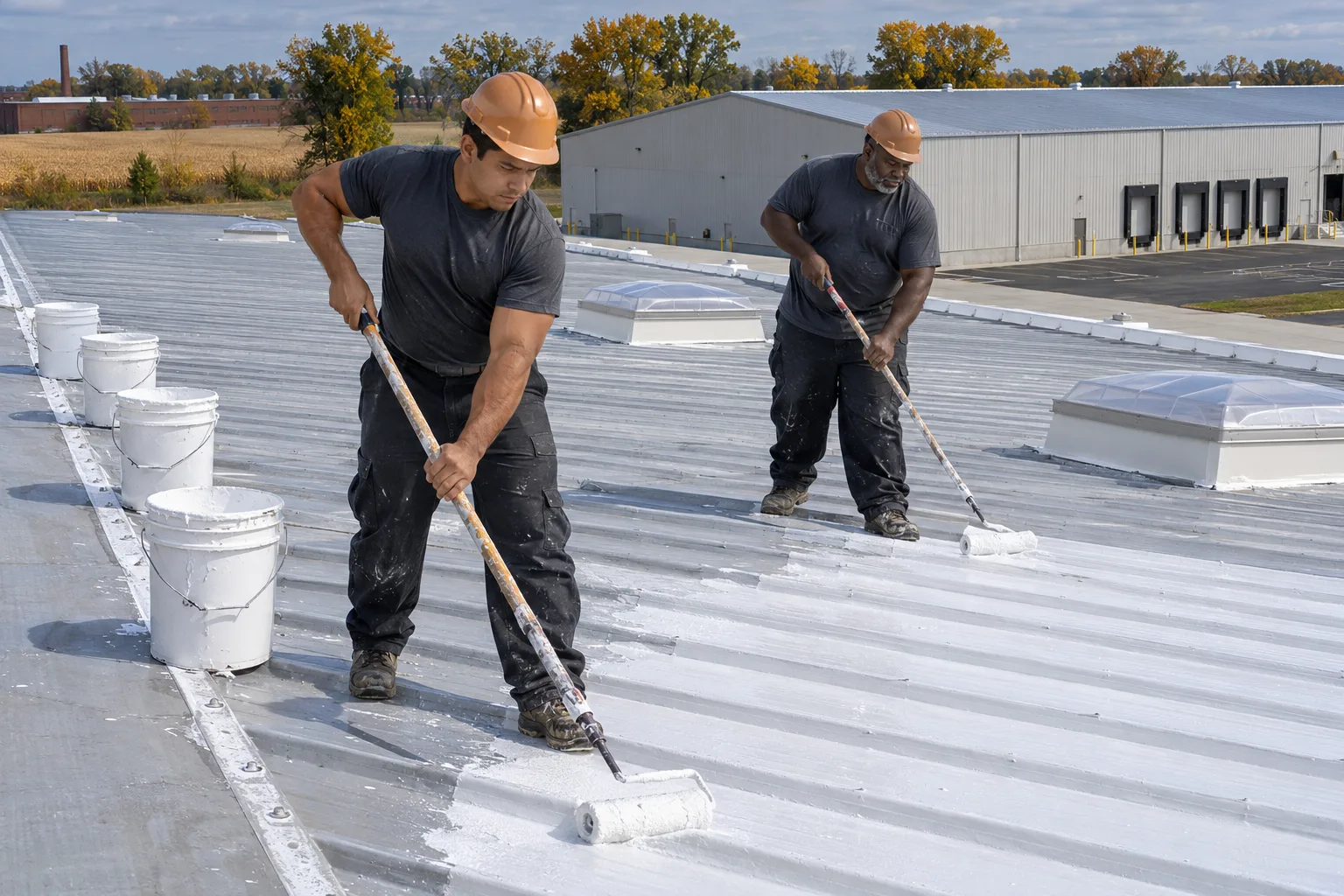
Fits office or warehouse wings with pitched steel that drains well between storms.
Acrylic Roof Coating details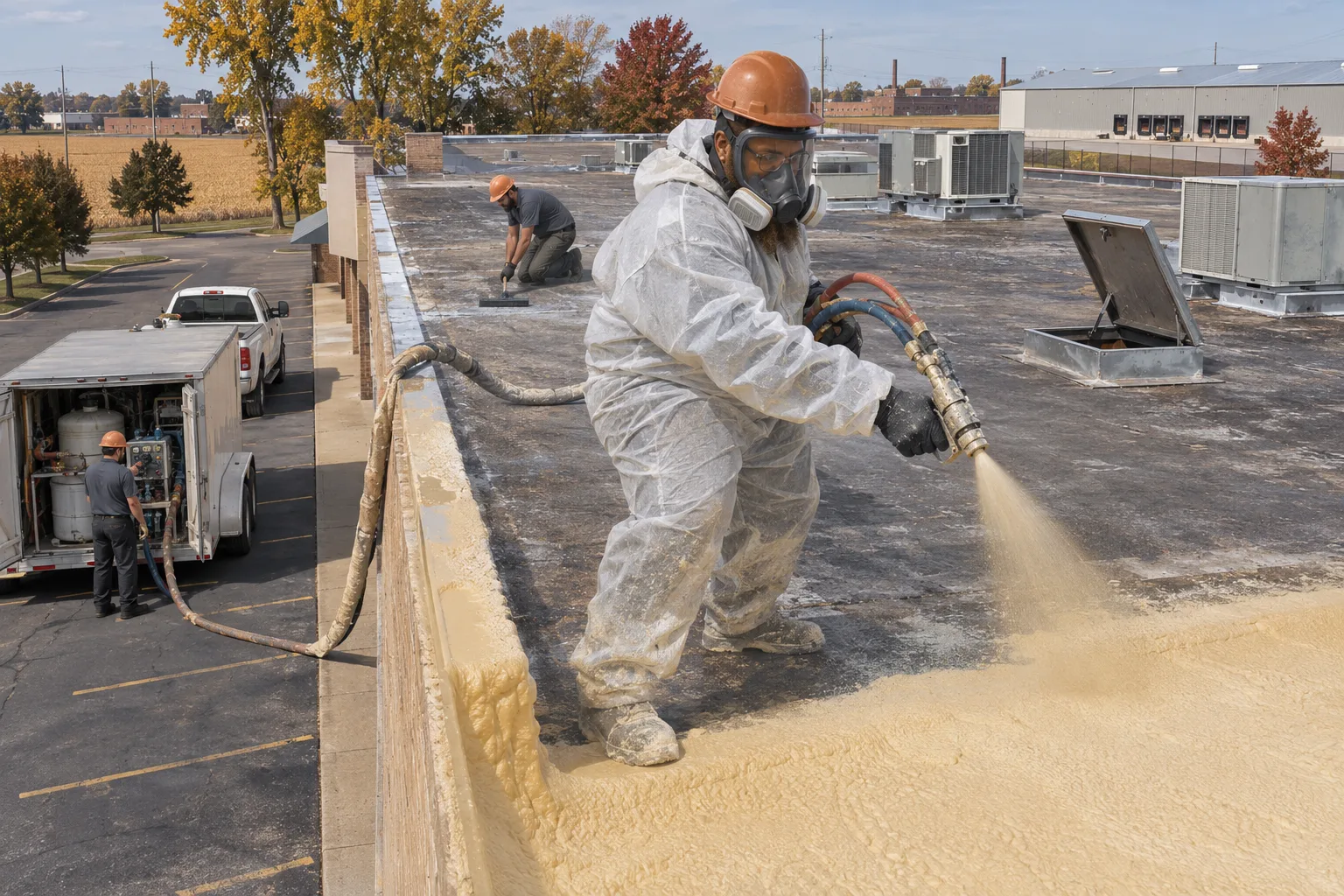
Covers an older plant roof with many openings and adds insulation over the production floor.
Spray Foam Roofing details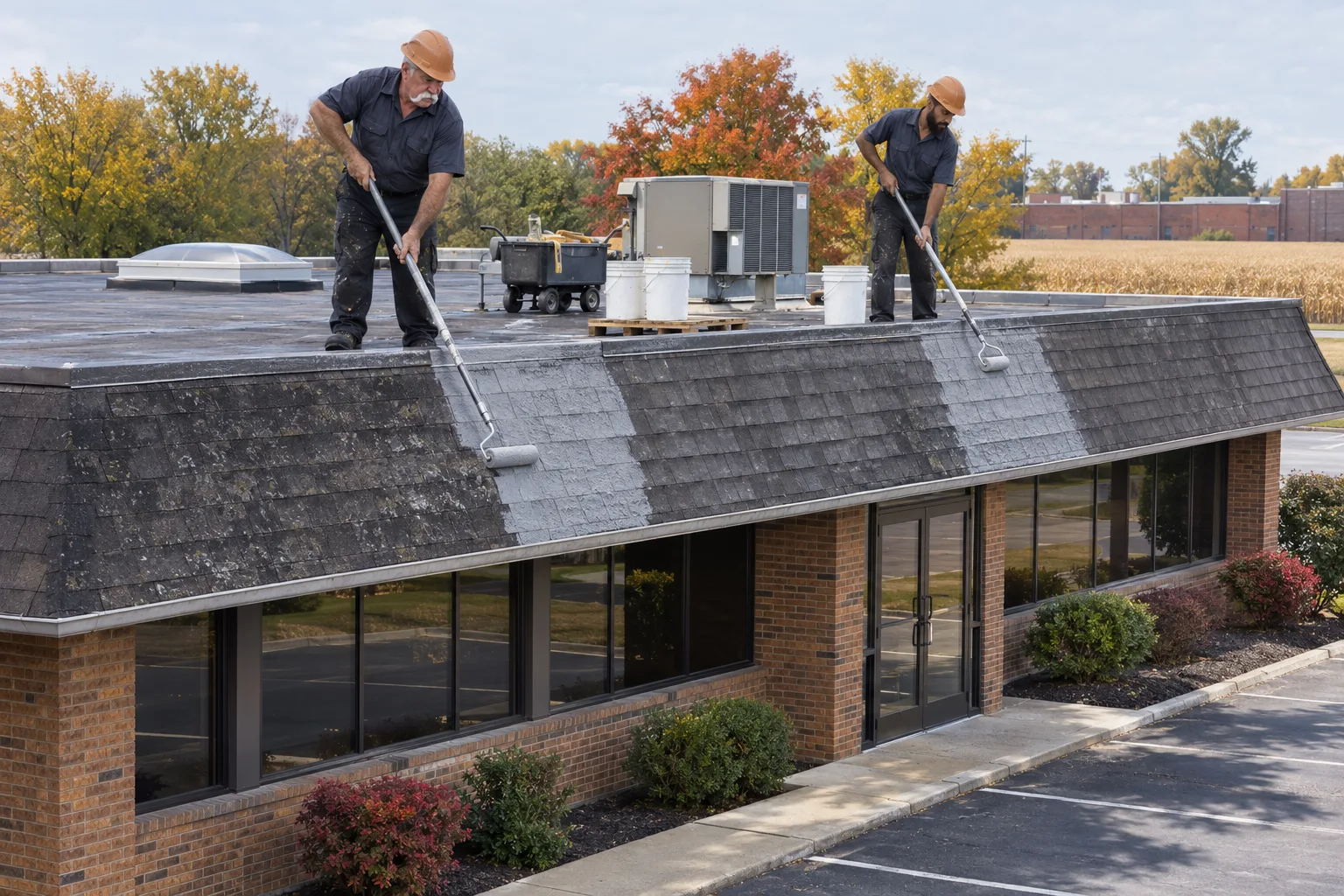
Applies to shingle-roofed offices that share a property with the plant.
Shingle Roof Coating detailsLeaks over production lines or panels need prompt attention. Call and tell us which opening sits closest to the drip.
Call UsPlanning repairs and coating together? Get a free ballpark range for the roof size first.
Get A Free EstimateIndustrial jobs follow five stages, and every one of them starts at the openings.
Every stack, vent, fan, and curb is listed and photographed, and rust around each is graded. We check insulation below the openings with a moisture meter.
Openings ListPanels with holes are cut out and replaced, and each opening gets new flashing set in sealant with fabric reinforcement.
RepairsGrime and residue from exhaust are washed off, and bare or treated steel is primed so the coating grips.
PrepExtra coating goes around every opening first, then the field is coated to thickness with readings logged by section.
CoatingWe go over each repaired opening with your maintenance staff and leave a list they can check after storms.
HandoverPlants, warehouses, and church halls in Anderson itself.
Anderson metal roof coatingOlder shops and farm roofs with layers of patches.
Elwood metal roof coatingSeveral metal buildings on one lot, coated in turn.
Pendleton metal roof coatingLeak history and past repairs guide the inspection.
Alexandria metal roof coatingGutters and eaves decide silicone or acrylic.
Fortville metal roof coating
We do. Hartford City is in our service area, and we coat industrial and commercial metal roofs there. Panel condition, rust, screws, vents, and drainage are all checked before we suggest silicone, acrylic, or foam, and if panels need replacing first, you hear that before any coating price.
Hartford City is part of our regular service area. Send the plant address and roof size, or call, and we will set up a walk of the roof and its openings.
Look for one who starts at the openings. Ask how stacks, vents, and fan curbs will be flashed, whether rusted panels will be replaced or covered, and how production will run during the work. Those answers say more than a price per square foot.
Coating falls in our published range of about $2.50 to $4.00 per square foot, with replacement at about $5 to $8. Industrial roofs with many openings and rust-through panels land higher, because flashing and panel work add up. The inspection sets your number.
In most cases, yes. Crews coat away from running equipment and schedule short shutdowns only for work right next to a fan or intake. Those windows are agreed with your plant manager in advance.
Coatings have heat limits, so the area right at a hot stack gets flashing and a heat-rated product as the maker lists. Farther out on the field, the standard coating goes on at its normal thickness.
Send the roof size for a ballpark range, or call to set up a walk of the roof and its openings.